Xeriscape Yard Drainage and Monsoon Flooding: Why Gravel Yards Push Water Into Tucson Foundations
Xeriscaping is the right call for a Tucson water bill, but a gravel-and-rock yard doesn’t drain the way grass does — and during a monsoon downpour, that difference shows up fast. Homeowners who never had a water problem in a grass yard suddenly find water sheeting toward the house, pooling against a wall, or finding its way into a garage during the exact storms that make xeriscaping worth it the other 350 days a year. Here’s why gravel yards behave differently in a monsoon burst, and what actually needs to change about the grading.
Why Gravel Doesn’t Behave Like Grass in a Downpour
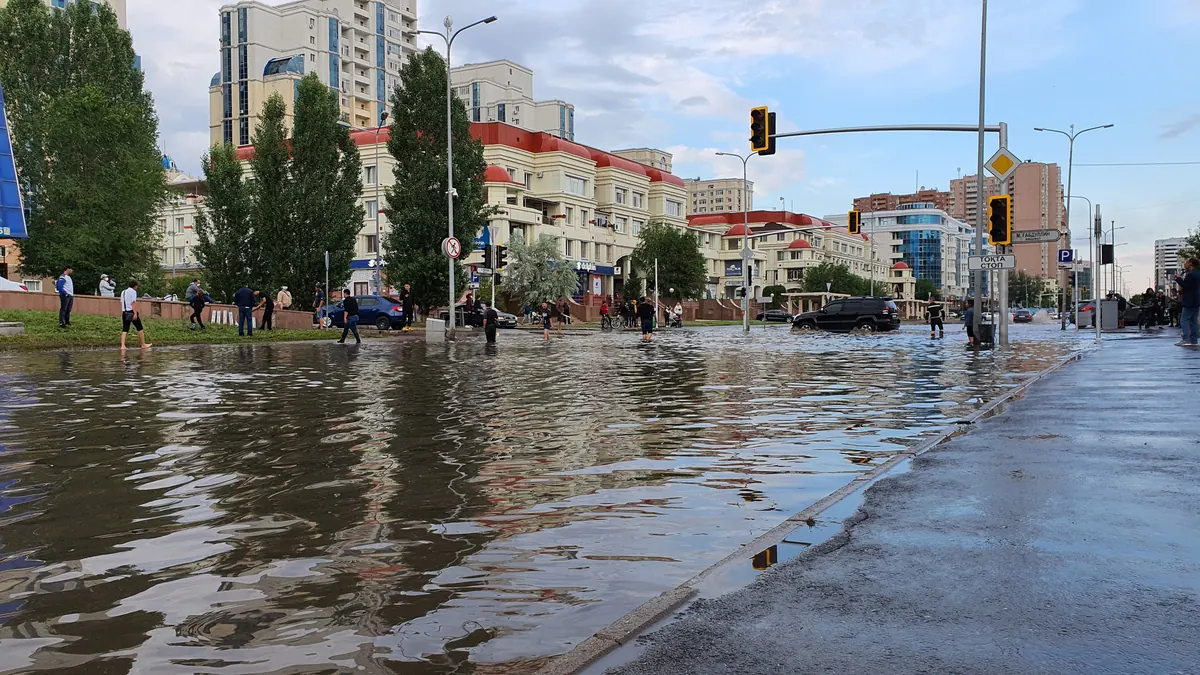
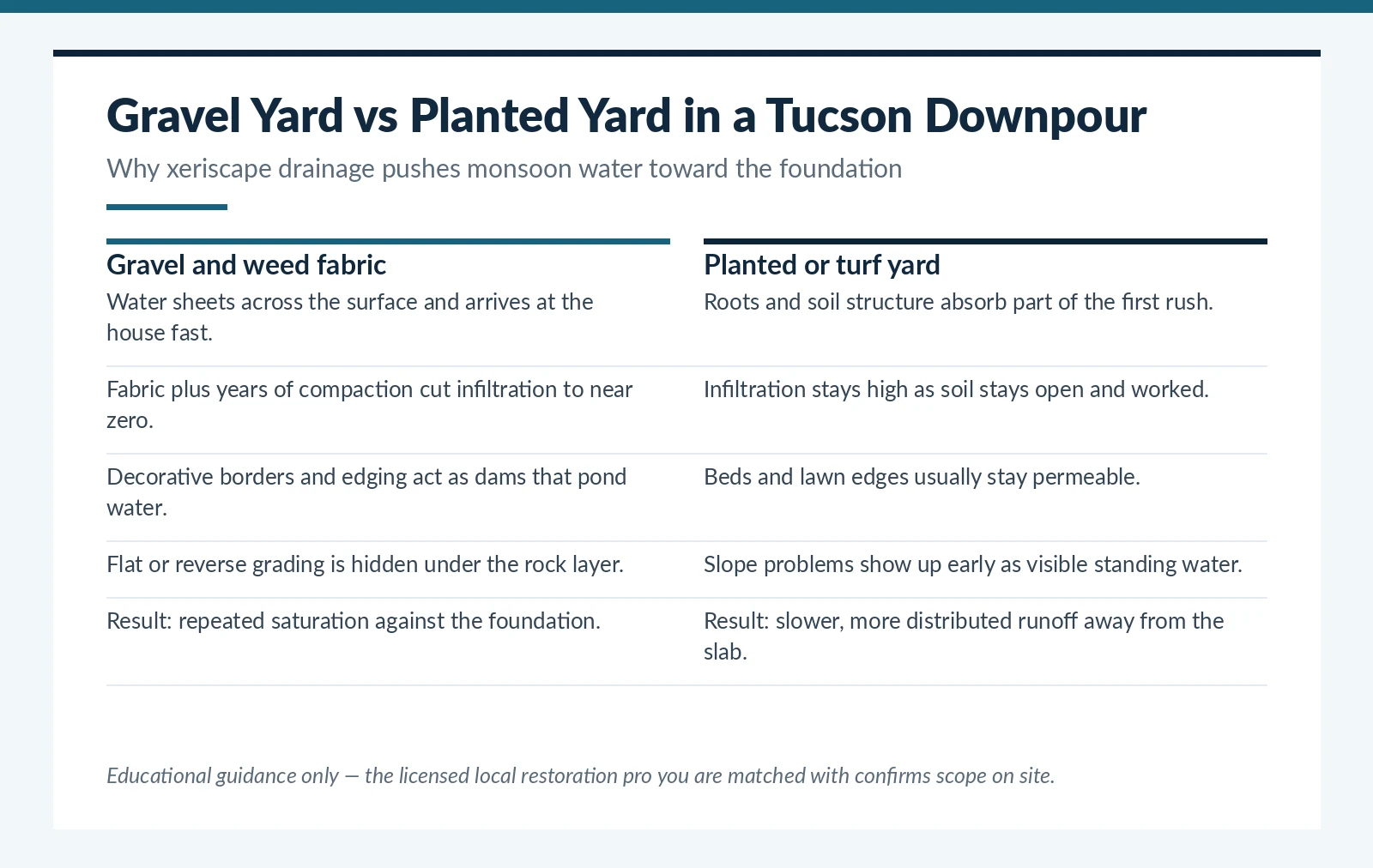
Grass and living soil absorb rainfall gradually, with root channels and organic matter creating pathways for water to soak in over time. A compacted gravel yard sitting on decorative fabric or a base layer behaves much more like a hard surface: water that lands during a monsoon’s typical burst — an inch or more in under an hour is common — runs off across the top of the rock almost as fast as it would off pavement, rather than soaking in where it falls. That runoff has to go somewhere, and without intentional grading, “somewhere” is often toward the house.
The Grading Mistake That Shows Up Almost Everywhere
Xeriscape conversions are frequently done for water savings and curb appeal without a fresh look at drainage grading, and the most common result is a yard that’s flat or even slightly sloped toward the foundation rather than away from it. On a lawn, that flaw might go unnoticed for years since grass slows and partially absorbs the flow. On gravel, the same flaw becomes visible during the very first serious monsoon cell, with water sheeting directly at a wall, sliding door track, or garage apron.
Decorative Borders and Edging Create Their Own Dams
Steel, paver, or block edging used to define rock beds and planting areas looks clean, but installed without a drainage gap or weep point, that same edging becomes a small dam during a heavy cell. Water pools against the uphill side of the border, saturates the soil there far longer than it should, and often finds the nearest low point — frequently a foundation wall or a door threshold below grade.
Weed Fabric and Compaction Compound the Problem
Weed barrier fabric under the rock, combined with years of foot traffic and rock settling, reduces what little infiltration the yard had to begin with. Water that would have partially soaked into bare soil instead sheets across the fabric layer, picking up speed and volume as it travels toward the lowest point in the yard — which, on a poorly graded property, is exactly where the house sits.
What Water Sitting Against a Foundation Actually Does
A few hours of standing or slow-draining water against a slab or foundation wall during a monsoon cell rarely causes visible damage immediately, but repeated exposure through a full monsoon season is a different story. Moisture works into stucco at grade level, wicks upward through masonry over time, and finds any gap at a door threshold, expansion joint, or utility penetration. Our guide to the Tucson monsoon season prep checklist covers the pre-season grading and gutter checks that prevent this cycle from starting in the first place, and repeated wetting is exactly the kind of slow damage covered in our guide to why “it looks dry” doesn’t mean a wall assembly actually is.
Fixes That Actually Work
Regrading the first several feet around the foundation to slope away from the house, even a modest two-percent grade, changes the outcome dramatically. Adding a shallow dry creek bed or rock-lined swale to intercept and redirect sheet flow works with the xeriscape aesthetic rather than against it. Cutting weep gaps or small breaks in solid edging at low points lets trapped water escape instead of pooling. And extending downspouts well past the drip line, rather than letting roof runoff dump directly onto compacted gravel next to the foundation, removes one of the largest volume contributors during a heavy cell.
When to Get a Professional Opinion
If water has already reached a garage floor, come under a door threshold, or left a visible stain at the base of an interior wall after a monsoon storm, that’s no longer a landscaping question alone. Our guide to flash flood water damage in Tucson covers what to check once water has actually entered the structure, since the grading fix and the drying-out process are two separate jobs that both need to happen.
If monsoon runoff has already reached your foundation or come inside this season, call now and we’ll connect you with a licensed local restoration contractor who can assess the water intrusion and the drying needed. Availability varies with provider schedule and monsoon-season demand.
→ Call now to connect with a local restoration crew
For the complete picture on how monsoon water gets into Tucson homes — and the 24–48 hour mold-prevention window once it does — see our Tucson Monsoon Flood & Mold Prevention Guide, backed by our sourced Tucson Monsoon Season Data & Home Flood-Risk Reference on wash-flood speed and historical storm events.
Frequently Asked Questions
Why does my gravel yard flood when my neighbor’s grass yard doesn’t?
Grass and living soil absorb rainfall gradually through root channels; compacted gravel over weed fabric behaves more like a hard surface, shedding water quickly rather than absorbing it, which concentrates runoff toward whatever low point exists in the yard.
Is xeriscaping a bad idea in a monsoon climate?
No, but it requires deliberate drainage grading, since gravel doesn’t provide the natural absorption a lawn does. A properly graded xeriscape yard with intentional runoff paths handles monsoon bursts fine; a flat or poorly graded one concentrates water where grass would have partly absorbed it.
Do I need a professional to regrade my yard?
Minor grading near a foundation, adding a dry creek bed, or cutting weep gaps in edging are often manageable as a landscaping project. If water has already entered the structure, that’s a separate assessment for water intrusion and drying, not just a grading fix.
How much slope do I need away from my foundation?
A common general guideline is roughly a two-percent grade, or about a quarter-inch of drop per foot, sloping away from the house for the first several feet. Exact needs vary by soil type and how much water a specific yard sheds during a storm.
Can decorative rock borders really cause water problems?
Yes. Solid edging without a drainage gap or weep point acts as a small dam, pooling water against its uphill side longer than the soil would otherwise hold it, often redirecting that pooled water toward a foundation.
What should I check after every monsoon storm?
Look for pooling that lingers for hours rather than draining within a reasonable time, water marks or dampness at the base of exterior walls, and any moisture at door thresholds or garage floors, especially after the season’s heavier cells.
Tucson Restoration Pros is a dispatch and matching service connecting homeowners with independent, licensed water damage restoration professionals. We do not perform restoration work ourselves. We are not affiliated with any government agency. In a life-threatening emergency, call 911.
Leave a Reply