Water Damage Restoration in Tempe
Landlocked and fully built out, Tempe has some of the valley’s oldest housing and busiest rentals — where leaks hide longest. We match you with a licensed local restoration pro, 24/7.
Get connected to a Tempe restoration pro
Call now — we route your request to a qualified, licensed local restoration company.
📞 Call Now — (612) 886-9863Free to request. No obligation. We connect you with independent, qualified, licensed local restoration companies — we are a referral service, not a contractor.
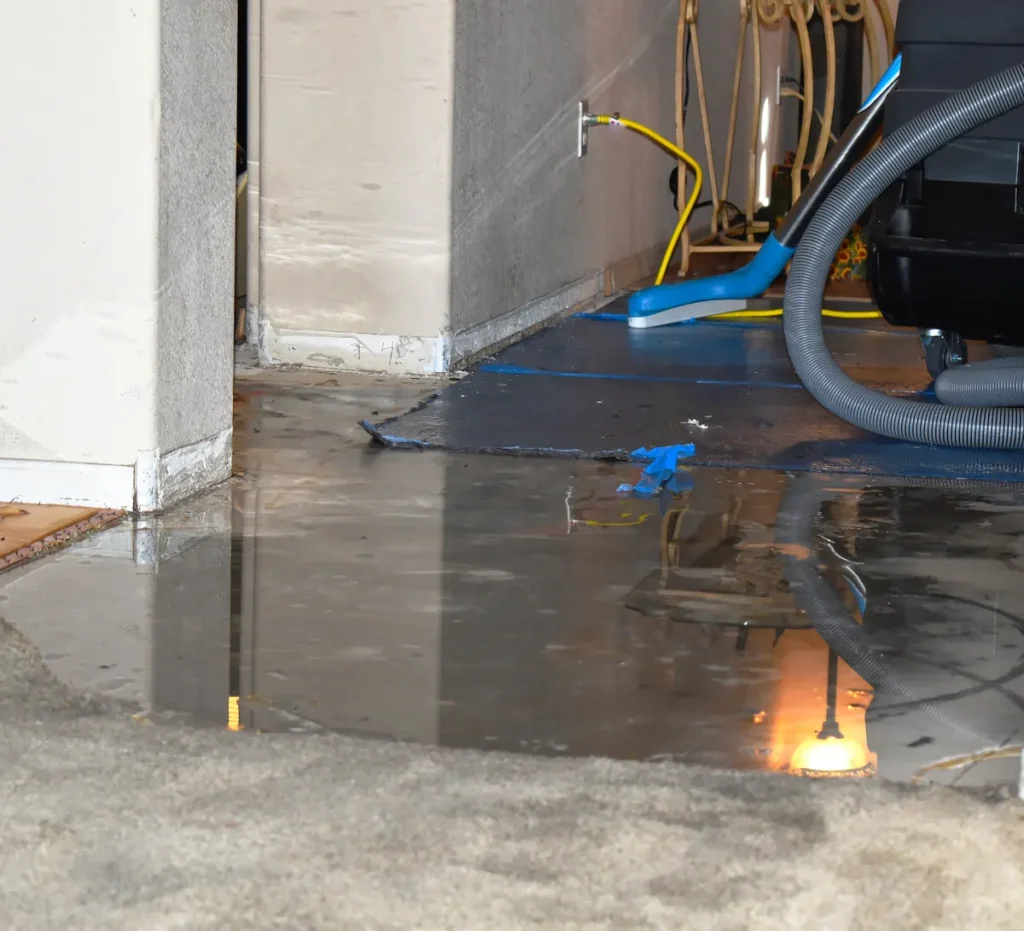
Tempe can’t grow out, only up — so its neighborhoods stay old. Maple-Ash, Broadmor, Hughes Acres, and the blocks ringing ASU date to the 1940s–60s, carrying galvanized supply lines, cast-iron drains, and flood-irrigation grading from Tempe’s farm era. Add the metro’s densest rental market — where nobody quite owns the problem until it’s a ceiling stain — and Tempe losses tend to be found late, which makes them bigger.
How does water damage start in Tempe homes?
Age and tenancy. Mid-century plumbing is at or past end-of-life across south-of-University neighborhoods: pinholing galvanized supply lines, cracked cast-iron drains backing Category 3 water into tubs and floor drains, and water heaters tucked in garages that quietly rust out. In student rentals, a dripping wall or musty closet can go unreported for a semester — by discovery it’s a mold remediation job, not a drying job.
Tempe’s geography adds a subtle factor: it sits low and flat along the Salt River bed, and older flood-irrigated lots hold water. Monsoon cells that stall over the east valley pond water in streets and yards; homes with settled grading take it at the threshold. Tempe Town Lake itself is well-engineered, but the neighborhoods that pre-date modern drainage standards — much of the city — depend on grading that has had 60 years to settle the wrong way.
Tempe at a glance
| ZIP codes | 85281–85284 |
|---|---|
| Jurisdiction | City of Tempe · Maricopa County |
| Elevation | 1,140 ft |
| Terrain | Low, flat Salt River valley floor; fully built out |
| Key drainage | Salt River / Tempe Town Lake, city storm drains, legacy irrigation grading |
| Housing stock | 1940s–60s core; dense rentals near ASU; newer infill condos |
From Tempe we can also connect you for storm & flood cleanup, sewage backup cleanup, and Arizona restoration cost guidance.
What should you do in the first hour?
Stop the source & stay safe
Shut off the water at the fixture or the main (and the power, if it’s safe). Keep people clear of sagging ceilings, contaminated water, and anything electrical that got wet.
Document it
Photograph and video everything before cleanup begins — your insurance claim is built on what you capture in these first minutes.
Get a local crew moving
We connect you with a qualified, licensed Tempe-area restoration company — fast. The EPA’s 24–48 hour window to limit mold starts now, not when the adjuster calls back.
Water, fire or mold damage in Tempe?
Get connected with a qualified, licensed local restoration crew — 24/7 across Tempe and statewide Arizona.
Who handles water damage in a Tempe rental — landlord or tenant?
Both, in sequence. The tenant’s job is immediate: stop what water they can, notify the landlord in writing, and protect their belongings — renters insurance covers contents, the landlord’s policy covers the structure. The landlord’s job is mitigation: Arizona’s Residential Landlord and Tenant Act requires maintaining habitable premises, and a wet, molding unit fails that test fast. The practical move for either party is getting a professional crew on-site the same day; our matched Tempe companies work with property managers daily and document everything both insurers will ask for.
For owner-occupants in Tempe’s historic districts, the calculus is preservation: 1950s hardwood and plaster can often be saved with fast, aggressive drying that would be impossible a week later. Crews follow IICRC S500 standards — extraction first, then controlled demolition only of what can’t be dried, then monitored drying with daily moisture readings. If sewage backed up through a floor drain (common with root-invaded cast iron), the affected porous materials come out, full stop; see our Arizona cost breakdown for how that changes scope.
What restoration help is available in Tempe?
Emergency Water Removal
Standing water extracted same-day before it climbs walls and cabinets. 24/7 emergency dispatch to homes across Tempe.
Storm & Flood Cleanup
Monsoon and flash-flood water is contaminated Category 3 — proper cleanup means extraction, tear-out, disinfection, and verified drying.
Burst Pipe & Plumbing Leaks
Supply-line bursts, slab leaks, and hidden in-wall failures — located, extracted, and dried to IICRC standards by a licensed crew near you in Tempe.
Sewage Backup Cleanup
Backed-up drains and failed laterals cleaned under containment with disinfection and safe disposal — keep people and pets clear until help arrives.
Structural Drying & Mold Control
Air movers, dehumidifiers, and daily moisture readings until the structure verifies dry — the step that keeps a Tempe water loss from becoming a mold loss.
Insurance Claim Help
What to photograph, when to notify, and how Arizona claims actually move — plus documentation from the crew your adjuster will want.
Tempe restoration FAQs
Which Tempe areas do you cover?
My apartment ceiling is leaking from the unit above — whose problem is it?
The house I rent near ASU smells musty — should I worry?
Do you handle sewage backups in older Tempe homes?
About this guide
This page is researched, written, and reviewed for local accuracy by the Tucson Restoration Pros team. It draws on primary and scientific sources — including the IICRC S500/S700 restoration standards, the U.S. EPA and CDC on mold, the WHO guidelines on dampness and mould, NWS Phoenix forecasts and monsoon climatology, University of Arizona CLIMAS research, FEMA flood maps, and Flood Control District of Maricopa County resources. See how we research. Tucson Restoration Pros is a referral service that connects Arizona homeowners with independent, qualified restoration companies; we are not a licensed restoration contractor and do not perform the work ourselves.
Connect with a Tempe restoration crew
Call now and we’ll connect you with a qualified, licensed local restoration company near you — 24/7.
📞 Call Now — (612) 886-9863Free, no obligation. We’re a referral service, not a contractor.