Water Damage Restoration in Buckeye
Buckeye built most of its houses in one giant burst — which means thousands of water heaters, supply hoses, and angle stops are all reaching failure age together, fed by some of the hardest municipal water in the Valley. We match you with a licensed local restoration pro, 24/7.
Get connected to a Buckeye restoration pro
Call now — we route your request to a qualified, licensed local restoration company.
📞 Call Now — (612) 886-9863Free to request. No obligation. We connect you with independent, qualified, licensed local restoration companies — we are a referral service, not a contractor.
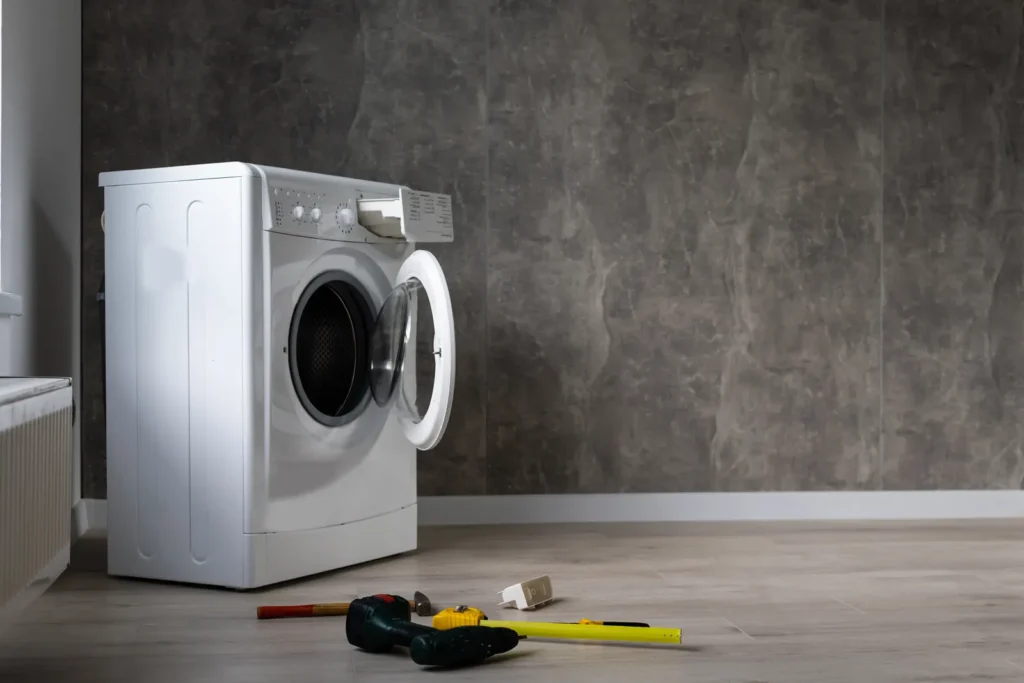
Buckeye is one of the most rapidly growing cities in the country, and that growth has a plumbing consequence: nearly the whole housing inventory — Verrado, Sundance, Tartesso, Festival Ranch, and the neighborhoods around downtown — went up in the same two-decade window. The water heaters, washing-machine hoses, and quarter-turn angle stops installed during that boom are now hitting the 15-to-25-year failure zone together, and Buckeye’s municipal water, among the hardest in the Phoenix metro, is pushing many of them over the edge early. Add White Tank Mountain runoff, the Hassayampa River corridor, and flat former farmland that drains slowly, and monsoon season keeps its own claim file here.
How does water damage start in Buckeye homes?
Mostly at the appliances and fittings, and mostly on schedule. A Sundance house finished in 2004 got a builder-grade water heater, rubber washing-machine hoses, and plastic-stemmed angle stops the same week as several hundred of its neighbors — so failures arrive in waves, not one-offs. Scale is the accelerant: Buckeye’s groundwater carries so much dissolved mineral that tank heaters rumble themselves apart years ahead of their rated life, cartridge valves seize, and the fill valves in toilets and softeners stick. Homes plumbed with water softeners and reverse-osmosis systems add another failure point — the thin quarter-inch RO supply line behind the fridge or under the sink lets go silently and wicks water through cabinet bases for weeks before anyone smells it.
Then there is the land itself. West-side neighborhoods sit on alluvial fans shedding off the White Tank Mountains, and the Hassayampa River — dry most of the year — carried destructive floods through the area in 1970 and again in 1993. Much of central Buckeye is converted farmland: laser-flat, slow to drain, and quick to pond a summer downpour against slab edges and garage thresholds. Monsoon storms here often announce themselves with a haboob first, then drop an inch of rain on ground the dust storm just capped.
Buckeye at a glance
| ZIP codes | 85326 · 85396 |
|---|---|
| Jurisdiction | City of Buckeye · Maricopa County |
| Elevation | ~890 ft |
| Terrain | White Tank alluvial fans sloping to Gila River farm flats |
| Key drainage | Hassayampa River corridor; Gila River to the south |
| Housing stock | Almost entirely 2000s+ master-planned (Verrado, Sundance, Tartesso, Festival Ranch) |
From Buckeye we can also connect you for storm & flood cleanup, sewage backup cleanup, and Arizona restoration cost guidance.
What should you do in the first hour?
Stop the source & stay safe
Shut off the water at the fixture or the main (and the power, if it’s safe). Keep people clear of sagging ceilings, contaminated water, and anything electrical that got wet.
Document it
Photograph and video everything before cleanup begins — your insurance claim is built on what you capture in these first minutes.
Get a local crew moving
We connect you with a qualified, licensed Buckeye-area restoration company — fast. The EPA’s 24–48 hour window to limit mold starts now, not when the adjuster calls back.
Water, fire or mold damage in Buckeye?
Get connected with a qualified, licensed local restoration crew — 24/7 across Buckeye and statewide Arizona.
Why distance and drainage change the playbook in Buckeye
Be honest about geography. Verrado sits a comfortable hop off the I-10, but Tartesso and Festival Ranch are a long drive from where most West Valley mitigation companies stage their trucks — crews typically roll from Goodyear, Avondale, or west Phoenix, and that drive time is real. It changes what you should do while help is on the road: get the main valve closed, move rugs and furniture out of the wet zone, pull baseboard-level items out of closets, and run every fan and the AC to start pulling humidity down. A homeowner who spends those forty minutes well can shave days off the drying schedule and hundreds of square feet off the demolition scope. When you submit your ZIP, the routing already accounts for which companies actually cover the far-west subdivisions.
Storm water deserves equal respect. The Hassayampa’s floods in 1970 and 1993 are the reason engineers treat its corridor carefully today, and the White Tank fans still shed sheet flow across the northwest side when a cell parks over the mountains. On the flats, monsoon rain that would run off in hillier towns simply stands — soaking into garage slabs, wicking up drywall, and finding every low threshold. Any water that arrives across the ground is Category 3, contaminated by definition, and — critically — homeowners insurance excludes rising surface water. That gap is covered separately; our Arizona monsoon flood insurance guide explains what a standard policy pays for and what requires a flood policy through the NFIP.
The hard-water story also shapes recovery budgets. Scale-shortened appliance life means Buckeye homes tend to flood from equipment failure rather than roof leaks — water heaters, softener loops, RO lines, dishwasher valves — and those losses are usually covered as sudden discharge, though the worn part itself is not. Understanding that distinction before you call your carrier is worth real money; our Arizona restoration cost guide walks through how mitigation, drying, and rebuild phases are typically priced so you can read an estimate like an adjuster does.
What restoration help is available in Buckeye?
Emergency Water Removal
Standing water extracted before it climbs walls and swells cabinet bases — 24/7 dispatch to Sundance, Verrado, Tartesso, and every Buckeye ZIP.
Storm & Flood Cleanup
Sheet flow off the White Tanks and ponded farm-flat runoff is contaminated Category 3 water — proper cleanup means extraction, tear-out, disinfection, and verified drying.
Burst Pipe & Supply-Line Damage
Failed angle stops, washer hoses, and scale-eaten fittings handled fast — extraction, cavity drying, and carrier-ready documentation for boom-era Buckeye homes.
Sewage Backup Cleanup
Backed-up drains cleaned under containment with disinfection and safe disposal — keep people and pets clear until help arrives.
Structural Drying & Mold Control
Air movers, dehumidifiers, and daily moisture readings until the slab and framing verify dry — the step that keeps a Buckeye water loss from becoming a mold loss.
Insurance Claim Help
How appliance-failure claims move in Arizona — sudden-discharge coverage, what to photograph, and the documentation your adjuster will ask for.
Buckeye restoration FAQs
Which Buckeye areas do you cover?
My water heater is barely 15 years old and it already let go — is that normal here?
Does the Hassayampa River actually flood? It looks dry all year.
We live in Tartesso — how quickly can a crew realistically reach us?
About this guide
This page is researched, written, and reviewed for local accuracy by the Tucson Restoration Pros team. It draws on primary and scientific sources — including the IICRC S500/S700 restoration standards, the U.S. EPA and CDC on mold, the WHO guidelines on dampness and mould, NWS Phoenix forecasts and monsoon climatology, University of Arizona CLIMAS research, FEMA flood maps, and Flood Control District of Maricopa County resources. See how we research. Tucson Restoration Pros is a referral service that connects Arizona homeowners with independent, qualified restoration companies; we are not a licensed restoration contractor and do not perform the work ourselves.
Arizona cities we serve
Connect with a Buckeye restoration crew
Call now and we’ll connect you with a qualified, licensed local restoration company near you — 24/7.
📞 Call Now — (612) 886-9863Free, no obligation. We’re a referral service, not a contractor.