AC Condensate Line Water Damage in Tucson
Tucson’s refrigerated air conditioning systems run harder and longer than almost anywhere else in the country — many units cycle nearly nonstop from May through September. Every one of those units produces condensate that has to drain somewhere, and when that drain line clogs, cracks, or backs up, the result is water damage that shows up far from where the actual problem started: a stained ceiling, a sagging patch of drywall, or water pooling in a closet two rooms away from the attic unit. This is a distinct failure mode from a swamp cooler leak or a roof leak, and it needs to be diagnosed correctly before repairs and drying can start.
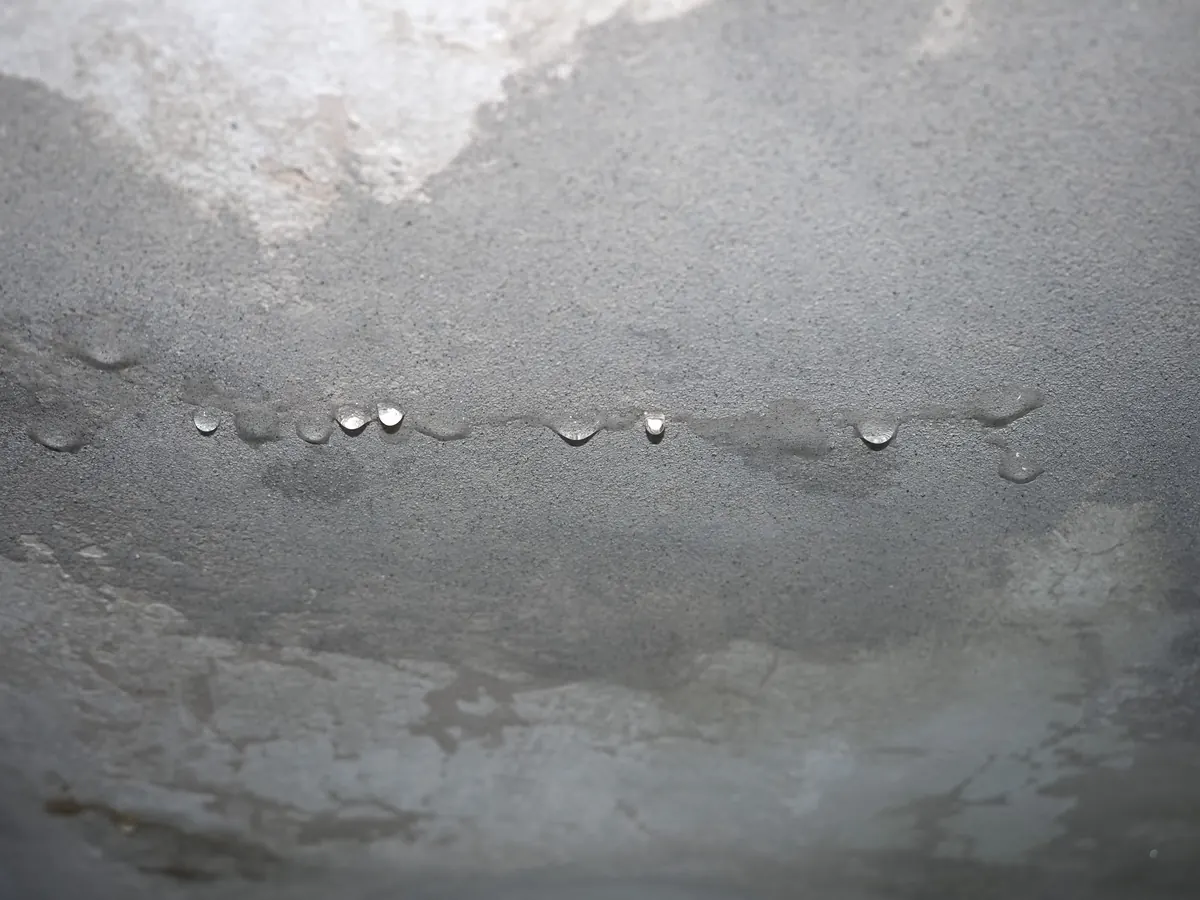
How condensate line failures damage Tucson homes
Most Tucson homes have their air handler in the attic or a closet, with a condensate drain line running to the exterior or into the home’s drain system, plus a secondary drain pan as a backup. Algae, dust, and mineral buildup are constant in Tucson’s dusty, hard-water conditions, and they clog condensate lines regularly — especially in systems that haven’t had a maintenance visit in a year or more. When the primary line clogs, water backs up into the drain pan; if the pan’s float switch fails or the pan itself has cracked or rusted through, water overflows directly onto the attic decking and ceiling drywall below.
Because the air handler often sits above a hallway, closet, or central part of the house rather than a single identifiable room, condensate leaks can go unnoticed for days — running quietly during the hottest part of summer when the system cycles most — until a ceiling stain, bubbling paint, or a musty smell announces a problem that’s already saturated insulation and framing above the ceiling line. In multi-story or split-level Tucson homes, a slow attic leak can also travel along framing members and show up on a wall or ceiling well away from the unit itself, which is why an accurate leak trace matters before anyone starts cutting into drywall.
AC condensate damage at a glance
| Common cause | Clogged drain line, cracked/overflowing drain pan, failed float switch |
|---|---|
| Peak season | May through September, cooling systems running near-continuously |
| Where damage appears | Ceiling below attic unit, closets, hallways, sometimes rooms away from the unit |
| Risk if ignored | Saturated insulation, mold in attic framing, ceiling drywall failure |
This condensate-driven damage is a different mechanism than a swamp cooler leak (evaporative cooling pad/pan failure) or a roof leak (envelope penetration), though all three can produce a similar-looking ceiling stain. If you’re not sure which applies, a licensed crew traces the moisture path before recommending repairs.
Tucson tip: if you see a ceiling stain appear or grow specifically during the hottest weeks of summer when your AC is running constantly, and you haven’t had a swamp cooler serviced recently or a recent storm, condensate backup should be high on the list of suspects — not just a roof leak.
What to do in the first hour after discovering a condensate leak
Shut off the AC system. Stopping the unit stops it from continuing to produce condensate and adding to the standing water.
Check the attic access if it’s safe. Note visible pooling, a full or overflowing drain pan, or sagging insulation — but don’t walk on unsupported ceiling joists.
Photograph the ceiling stain and any attic access findings. This documentation matters for your insurance claim.
Connect with a vetted crew. We route you to a licensed local water damage company that can trace the leak, dry the affected structure, and assess mold risk before it spreads further.
Get connected to a Tucson restoration pro
Call now — we route your job to a qualified, licensed local crew.
Get Help Fast
Free to request. No obligation. We connect you with independent, qualified, licensed local restoration companies — we are a referral service, not a contractor.
Tucson AC condensate water damage FAQs
How is a condensate line leak different from a swamp cooler leak?
A condensate leak comes from your refrigerated AC system’s drain line or pan backing up, typically in the attic. A swamp cooler leak comes from the evaporative cooling unit’s pads, float valve, or pan failing. Both can stain a ceiling similarly, but the fix and the location of the source differ.
Why does the stain show up far from where my AC unit is?
Water can travel along attic framing, insulation, and ductwork before it saturates drywall enough to show a visible stain, so the wet spot on your ceiling isn’t always directly below the leak source. A licensed crew traces the actual path before repairs begin.
Is this covered by homeowners insurance?
Coverage depends on your policy and whether the damage is considered sudden and accidental versus a result of long-term neglected maintenance. The restoration company you’re connected with can typically help document the damage for a claim.
Can I just catch the water and wait until fall to deal with it?
Not safely. Standing water in an attic saturates insulation and wood framing, and Tucson’s summer heat and humidity swings create fast mold risk once materials stay wet, per EPA guidance on the 24–48 hour drying window.
Does regular AC maintenance prevent this?
Yes, largely. Annual professional maintenance that flushes the condensate line and checks the pan and float switch catches most of these failures before they cause water damage — but once a leak has already happened, maintenance doesn’t undo the damage that’s occurred.
How fast can someone respond in Tucson?
Response depends on the provider’s schedule, current call volume, and your location. Same-day dispatch is common during peak summer cooling season but not guaranteed.
Related water damage services
Swamp cooler leak water damage (Tucson) · Ceiling water damage repair · Crawl space water damage · Roof leak water damage · Drywall water damage repair · Water damage restoration (Tucson) · Tucson Monsoon Season Data & Flood-Risk Reference
About this guide
This page is researched, written, and reviewed for local accuracy by the Tucson Restoration Pros team, drawing on the IICRC S500 water damage standard and U.S. EPA mold guidance. Tucson Restoration Pros is a referral service that connects Tucson-area homeowners with independent, qualified restoration companies; we are not a licensed restoration contractor and do not perform the work ourselves.
Disclosure: Tucson Restoration Pros (tucsonrestorationpros.com) is a lead-generation and referral service. We are not a restoration contractor, are not affiliated with any government agency, and do not perform restoration, mitigation, or repair work. When you call or submit your information, we connect you with one or more independent, qualified local restoration companies that handle the work, licensing, and insurance. We make no guarantee about any specific company’s results. In a life-threatening emergency, call 911.
Same-day, emergency, and 24/7 availability are not guaranteed and depend on provider schedules, location, and demand. Service availability, pricing, licensing, and final response times are determined solely by the providers.