Haboob Dust Storms Before the Rain: How Wind-Driven Debris Sets Up Tucson Homes for Monsoon Water Damage
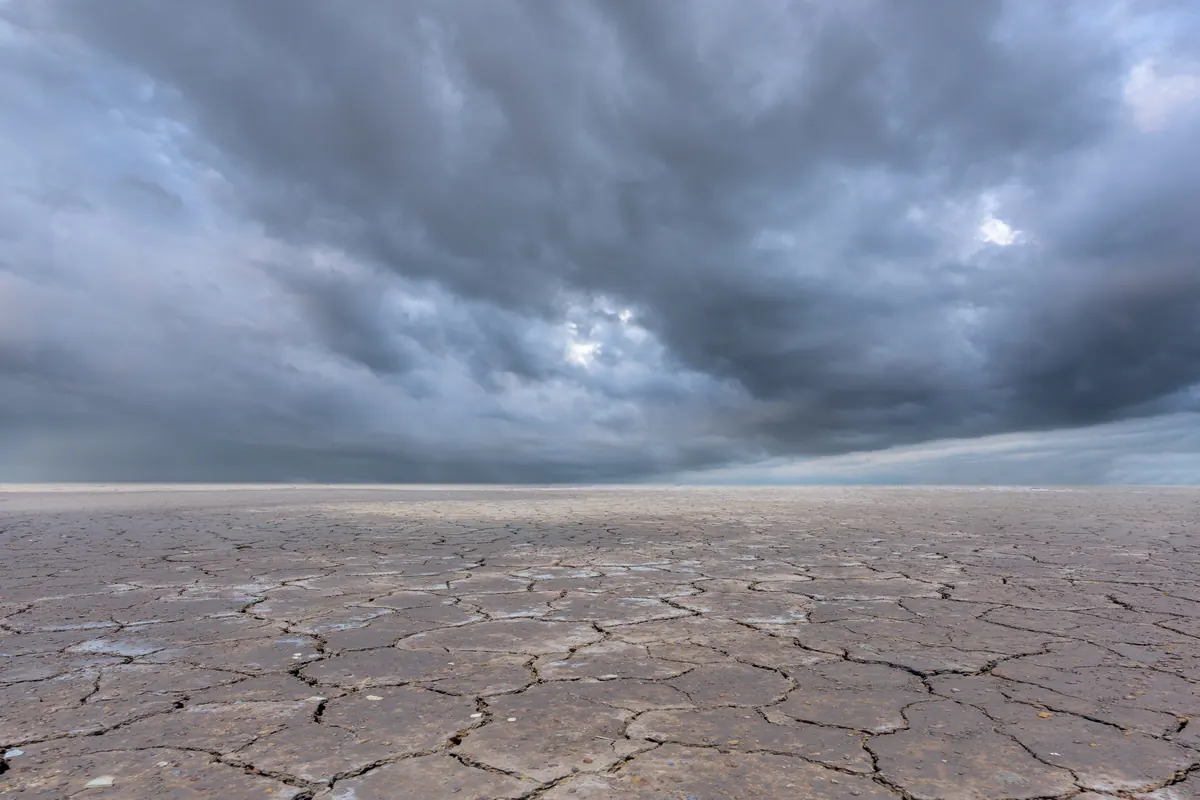
The classic Tucson monsoon sequence runs in a specific order: a wall of dust rolls in first, visibility drops to nothing for a few minutes, and then, sometimes twenty or thirty minutes later, the actual rain arrives behind it. That leading dust event — a haboob, driven by the same outflow winds that will bring the storm — isn’t just a dramatic photo opportunity. The wind and debris it carries quietly weaken exactly the seals, screens, and roof details that are about to be tested by the rain right behind it.
What a Haboob Actually Does to a House Before It Rains
Haboob winds regularly gust well past 40–50 mph, driving fine dust and small debris into every gap, vent, and seam on the windward side of a home. That dust infiltration alone is a nuisance, but the wind loading is the part that matters for what comes next: gusts test roof flashing, loose tiles or shingles, screen frames, and window and door seals right at their failure points, sometimes finishing the job a slow UV-baked crack started months earlier. A seal that was marginal survives normal weather for years and then fails during the ten minutes of peak haboob wind — just ahead of the rain that will actually exploit the new gap.
Roofs Take the Wind Test First
On Tucson’s common flat and low-slope roofs, wind-driven grit can abrade roof coatings and membrane seams over repeated storms, while gusts probe for any parapet cap, scupper, or flashing detail that’s already loose. A roof that looked fine in June can have a wind-loosened seam by the time the rain arrives fifteen minutes after the dust wall passes — our guide to monsoon roof leaks on Tucson flat roofs covers the specific failure points that matter most in this wind-then-rain sequence.
Windows and Doors Get Pre-Stressed, Then Soaked
The same wind-driven-rain intrusion covered in our guide to window leaks during Tucson monsoon storms gets a head start from the haboob itself: peak wind pressure against a window or door frequently arrives during the dust event, well before the rain core, meaning any marginal seal or hairline stucco crack gets its heaviest structural test first and its heaviest water test minutes later. A seal that survives the wind but is already compromised lets the rain in immediately once it arrives.
Debris Impact Creates New Damage, Not Just Old Damage Getting Worse
Beyond stressing existing weak points, wind-carried debris — branches, loose yard items, gravel kicked up from a neighboring xeriscape yard — can crack roof tiles, dent vents, or punch small holes in screens during the haboob itself. Those fresh openings become the specific entry points the trailing rain finds within the hour, which is why a haboob followed by heavy rain often produces damage that looks like it came from the rain alone, when the wind actually created the opening first.
What to Check Immediately After a Haboob, Before the Rain Hits
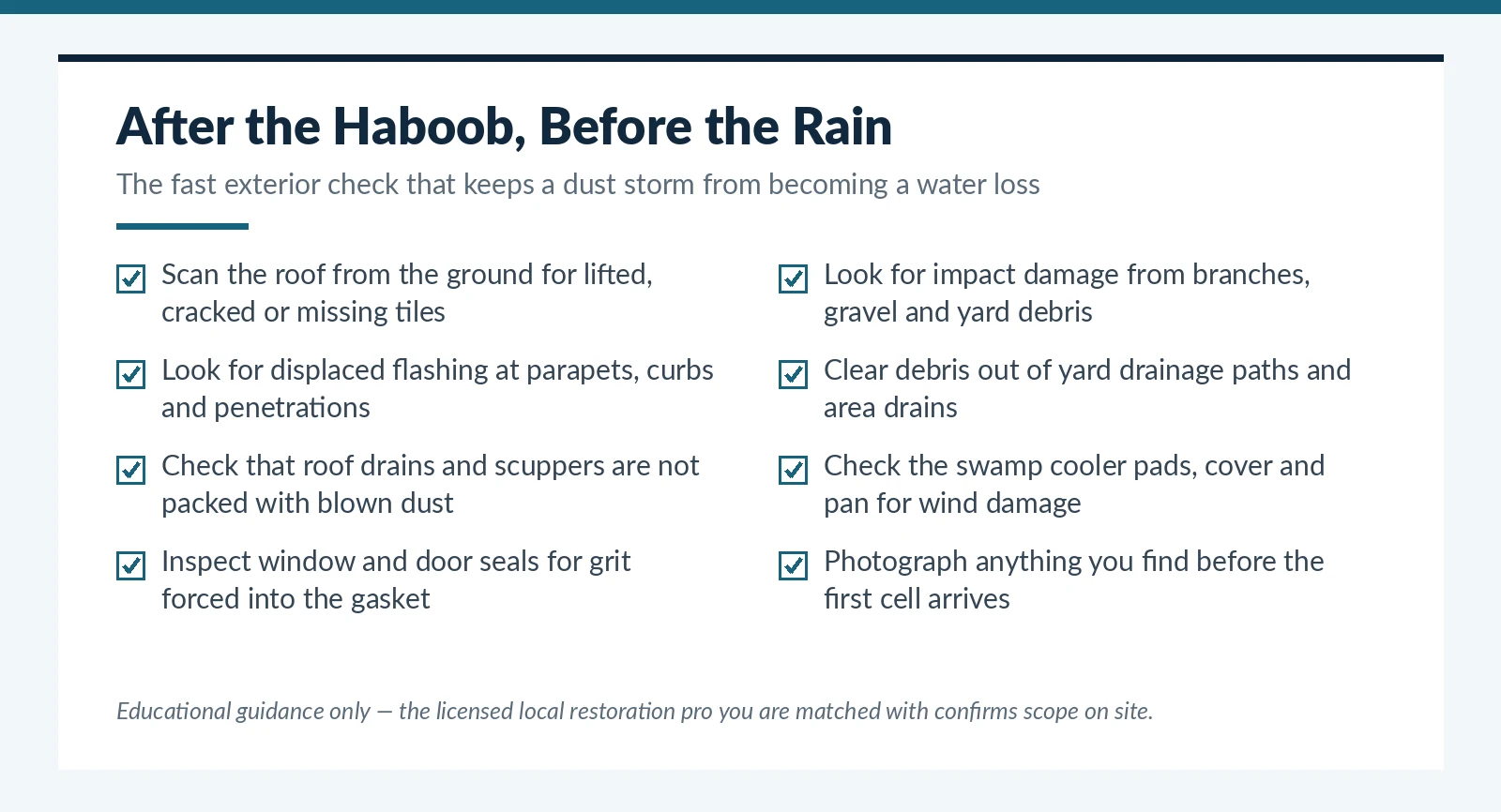
If there’s any gap between the dust wall passing and the rain core arriving, a fast exterior walk is worth the two minutes it takes: look for any newly loosened roof tile, vent cap, or flashing edge visible from the ground, check screen frames for fresh tears or dents, and glance at gutters and downspouts for debris that could block flow during the rain that’s minutes away. This isn’t always possible — some storms bring the rain right on the dust’s heels — but when there’s a window, it’s the highest-value two minutes of monsoon prep available.
What to Check After the Full Storm Passes
Once both the wind and rain have cleared, look specifically for damage that wasn’t there before this storm: new roof leaks, screens with debris punctures, and any water staining that appeared faster than a typical wind-driven-rain event would explain, since a pre-weakened seal often lets water in faster and in greater volume than a comparable intact one. Document everything with photos before any repair, since insurers may treat wind damage and water damage as separate covered events with separate documentation needs.
If a haboob-then-rain sequence has left water damage in your home this monsoon season, call now and we’ll connect you with a licensed local restoration contractor who can assess both the entry point and the drying needed. Availability varies with provider schedule and monsoon-season demand.
→ Call now to connect with a local restoration crew
Frequently Asked Questions
Does a haboob itself cause water damage?
Not directly — a haboob is dust and wind, not rain. But the wind loading and debris impact it carries frequently create or worsen the exact roof, window, and seal weaknesses that the rain arriving minutes later then exploits.
Why does rain always seem to follow a dust storm in Tucson?
Both come from the same outflow boundary of a monsoon thunderstorm cell. The gust front and dust arrive first as the storm’s leading edge, with the rain core typically following behind it by minutes.
Should I inspect my roof after every haboob, even without rain?
It’s a reasonable habit during monsoon season, since wind loading alone can loosen roofing details even on storms that produce little or no rain at your specific location.
Can wind-blown dust alone damage window seals?
Dust itself mostly clogs vents and weep holes, but the wind pressure accompanying it is what stresses aging caulk and hairline stucco cracks, sometimes completing a failure that had been developing for months.
Is haboob wind damage covered differently than monsoon rain damage by insurance?
It can be, since some policies distinguish wind damage from water damage as separate perils with separate documentation. Photograph both the wind-related damage and any resulting water intrusion separately, and confirm specifics with your carrier.
How long does a typical haboob last before the rain arrives?
It varies by storm, from several minutes to a half hour or more, though some cells bring the rain core in close behind the dust wall with very little gap between the two.
Tucson Restoration Pros is a dispatch and matching service connecting homeowners with independent, licensed water damage restoration professionals. We do not perform restoration work ourselves. We are not affiliated with any government agency. In a life-threatening emergency, call 911.
Leave a Reply