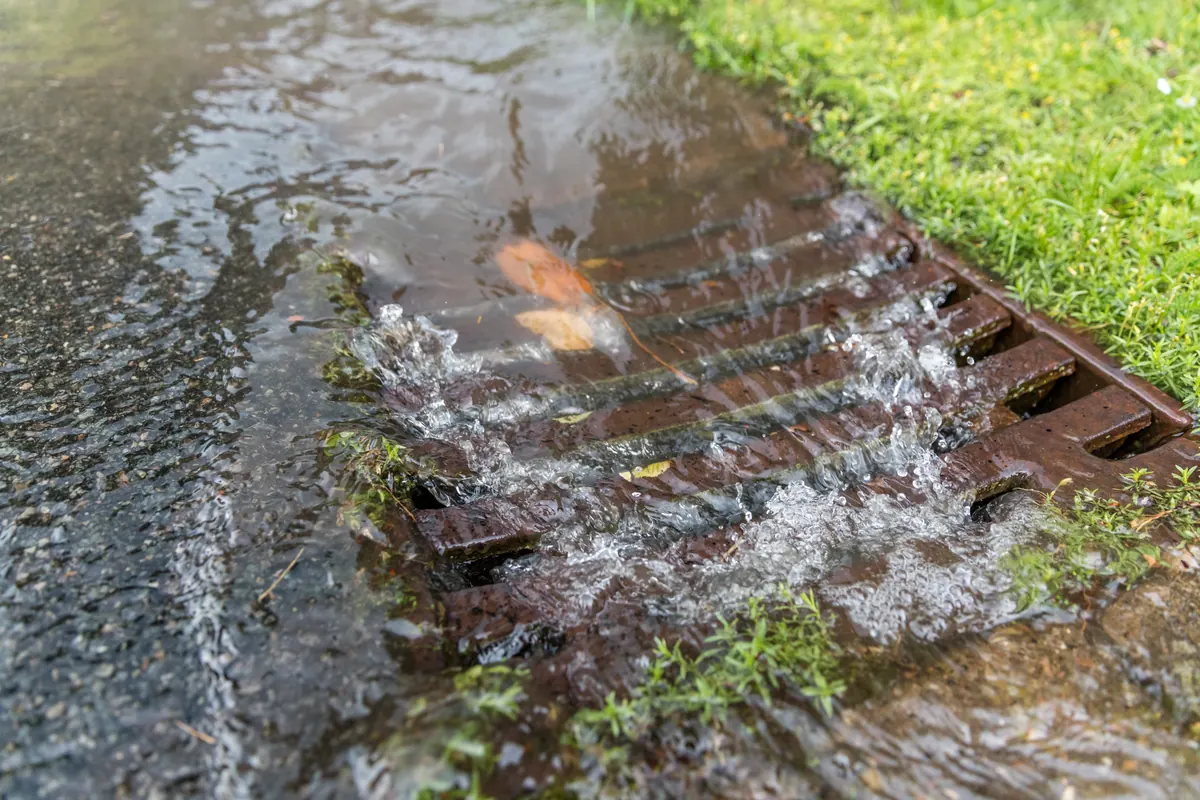
Sewer Backups During Tucson Monsoon Storms: Why Drains Reverse When It Rains Hard
It’s one of the ugliest surprises a monsoon cell can deliver: an inch of rain falls in forty minutes, and instead of staying outside, water starts coming up — out of the shower drain, the floor drain in the laundry room, or the lowest toilet in the house. Sewer backups during heavy rain are a documented mid-summer pattern across Tucson, and they’re fundamentally different from an ordinary clog: the water arriving is contaminated, the volume is driven by the storm rather than your household, and it keeps coming as long as the system outside is overloaded.
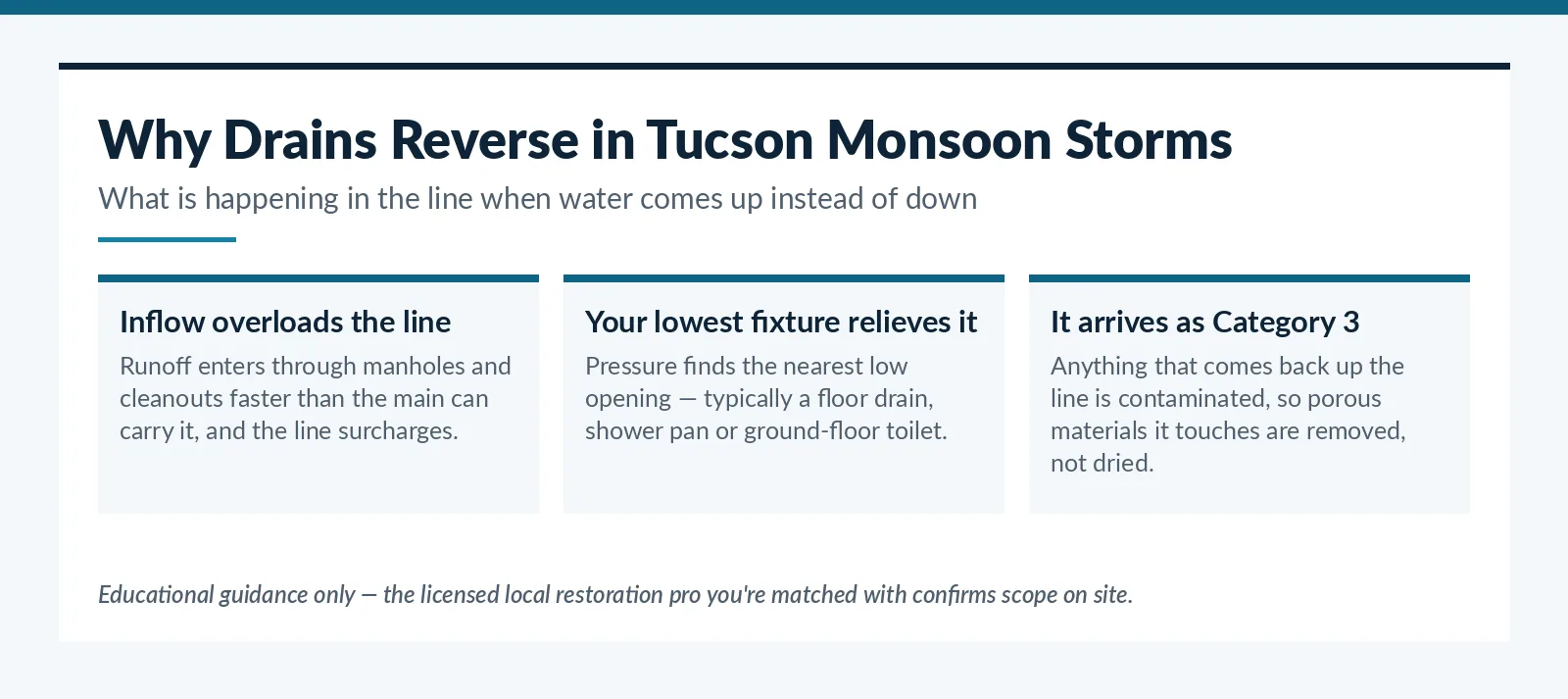
Why Heavy Rain Reverses Your Drains
Your home’s sewer lateral feeds a public main that was sized for wastewater — not for stormwater. During an intense monsoon burst, runoff finds its way into the sanitary system anyway: through cracked and root-damaged laterals across the neighborhood, through aging joints, through manhole covers sitting in flooded streets and washes. Engineers call it inflow and infiltration, and in an older system it can multiply the flow in the main many times over in under an hour.
When the main surcharges — fills beyond capacity — the water has to go somewhere, and it pushes back up the path of least resistance: the lowest opening on the lowest-sitting homes on the line. If your house sits low on the street, has a floor drain or a walk-in shower on the ground level, or has an older lateral, you’re the pressure-relief point for the whole block.
Roots are the multiplier. Even in the desert, mesquite, palo verde, and Aleppo pines drive roots into the moisture around lateral joints. A root mass that passes everyday flow without complaint becomes a dam the moment storm-driven volume hits it — which is why some homes back up in every big storm but never in between.
This Is Category 3 Water — Treat It That Way
Water that arrives through a drain is Category 3 (“black water”) by definition under the industry’s IICRC standard: it’s carrying sewage, regardless of how clear it looks. That classification isn’t bureaucratic hair-splitting — it changes everything about the cleanup, from protective equipment to what materials can be saved. Porous materials it touched — carpet pad, drywall it wicked into, particleboard cabinets — are generally removal candidates rather than drying candidates. Our breakdown of Category 1, 2, and 3 water explains the full framework, and our water damage category checker gives you a fast read on your specific situation.
The Warning Signs Before It Happens
Backups rarely come out of nowhere. During rain, listen and look for: gurgling from toilets or drains while the storm is running; water levels in the toilet bowl rising and falling on their own; slow drainage in the lowest fixtures that recovers after the storm passes; and sewer odor near floor drains or the yard cleanout. Any of these during a monsoon cell means storm flow is reaching your lateral and the margin is thin — the right time to act is before the first backup, not after the third.
If It’s Happening Right Now
Stop adding water — no flushing, no laundry, no showers, since everything you send down joins the backup. Keep people and pets out of contact with the water; it’s contaminated even when it looks gray. Kill power to affected rooms at the breaker if water is approaching outlets or appliances. Photograph everything before touching anything — standing water, the fixtures it came from, affected contents — because documentation drives the insurance conversation. And don’t attempt to shop-vac and carry on: Category 3 water that has soaked into porous materials needs professional extraction, removal, and disinfection, not just drying. What happens in the hours after the water stops matters as much as the event itself — our guide to the first 24 hours after water damage in Tucson lays out the timeline.
Before the Next Cell: Prevention That Actually Moves the Needle
Three measures do most of the work. A camera inspection of your lateral tells you whether roots, bellies, or cracks are waiting to become a dam — worth doing if you’ve had even one close call. A backwater valve installed on the lateral is the structural fix: a one-way flap that lets your wastewater out but physically blocks a surcharging main from pushing back in. And insurance review: standard homeowners policies typically exclude sewer backup unless you’ve added a specific water backup endorsement — an inexpensive add-on that people discover they needed one storm too late. Check whether your policy has it before August peaks.
If a backup has already put contaminated water in your home, don’t wait for it to “dry out on its own.” Call now and we’ll connect you with a licensed local restoration contractor who can extract, disinfect, and dry the structure properly. Availability varies with provider schedule and storm-season demand, so response times can shift during peak monsoon weeks.
→ Call now to connect with a local restoration crew
Frequently asked questions
Why does my sewer back up only when it rains?
Because the trigger is the public main surcharging with storm inflow, not a fixed clog in your line. Your lateral may pass everyday flow fine, but storm volume hitting a root mass or a filled main reverses the direction of flow toward your lowest drain.
Is sewer backup water really that dangerous if it looks clean?
Yes. Anything arriving through a drain is Category 3 water under the IICRC standard because of what it’s carrying, regardless of appearance. Contact, aerosols, and soaked porous materials are all exposure routes, which is why professional protocols treat it differently from a supply-line leak.
Will my homeowners insurance cover a monsoon sewer backup?
Often only if you carry a specific water backup endorsement — standard policies commonly exclude backup through sewers and drains. Review your policy now rather than during a storm, and document thoroughly if an event happens.
What is a backwater valve and do I need one?
A one-way valve on your sewer lateral that lets wastewater out but blocks a surcharged main from pushing back into the house. Homes that sit low on their street, have ground-level drains, or have already had one rain-driven backup are the natural candidates.
Can I clean up a small backup myself?
A few cups of water caught immediately on a sealed tile floor is one thing. Anything that reached grout lines, baseboards, carpet, or cabinets involves contaminated water in porous materials — extraction, removal, and disinfection territory, where DIY drying leaves contamination and moisture behind.
Does city monsoon flooding mean the sewer system failed?
Not necessarily — surcharge during extreme bursts reflects rain arriving faster than any sanitary system is designed to admit. The homeowner-side question is narrower: whether your lateral, your valve situation, and your low fixtures leave your house acting as the block’s relief point.
Tucson Restoration Pros is a dispatch and matching service connecting homeowners with independent, licensed water damage restoration professionals. We do not perform restoration work ourselves. We are not affiliated with any government agency. In a life-threatening emergency, call 911.
Leave a Reply