Swamp Cooler Leak Damage in Your Tucson Home: When to Call a Pro
Swamp Coolers Are Built to Handle Water — Until They’re Not
Evaporative coolers are everywhere on Tucson rooflines because they’re efficient for the desert climate, but they’re also a water appliance sitting directly above your ceiling for most of the year. When something inside one fails, the leak has a very short trip straight down into your attic, insulation, and drywall. Knowing the warning signs, and knowing when a leak has already gone past what a quick fix can handle, is the difference between a small repair and a full ceiling replacement.
How a Swamp Cooler Actually Starts Leaking
- Worn or clogged cooling pads. Pads that haven’t been changed in a season or two can channel water outside their intended path instead of down through the system as designed.
- A stuck or failed float valve. The float valve controls water level in the pan. When it sticks open, the pan overfills continuously until it overflows.
- A corroded or cracked pan. Older units, especially anything approaching or past 10–15 years old, develop rust-through or hairline cracks in the metal pan that let water seep out slowly.
- A clogged or disconnected drain line. If the overflow drain line is blocked or has come loose, water that should exit safely backs up and finds another way out — usually down through the roof mounting.
- Loose or degraded roof jack sealing. The seal where the unit mounts to the roof can dry out and crack in Tucson’s heat, letting water in around the base rather than through the unit itself.
Signs the Leak Has Already Started Doing Damage
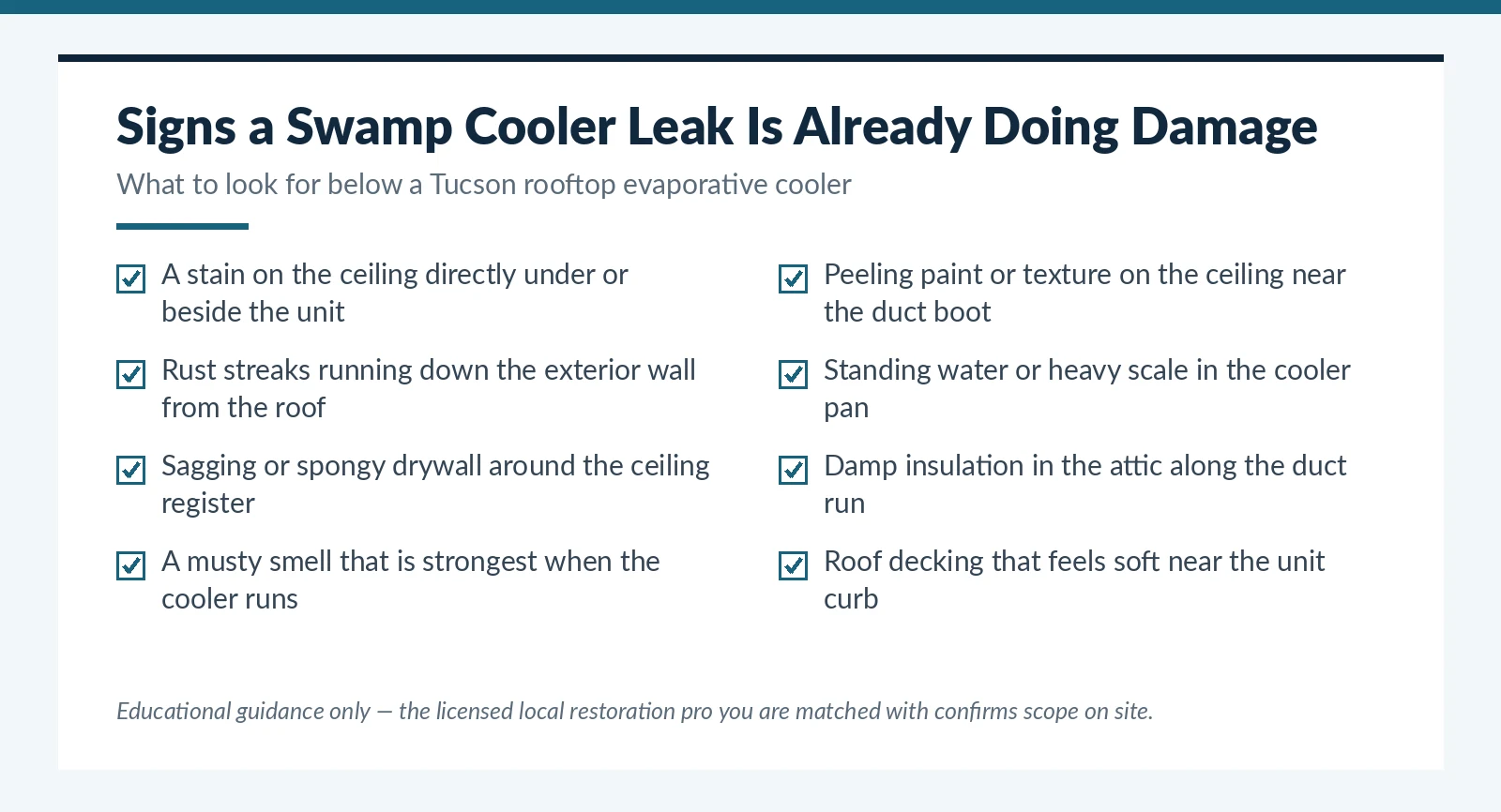
A swamp cooler leak is sneaky because it often drips slowly for weeks before anything is visible from inside the house. Watch for a ceiling stain directly beneath or near the unit’s mounting point, a slightly sagging or soft patch of drywall or texture, a musty smell in the room below that wasn’t there before cooling season, or a noticeable rise in humidity in that specific room. Any one of these means water has already been present long enough to soak insulation and, in many cases, start affecting the ceiling material itself.
Why It’s Often Worse Than It Looks From the Ground
By the time a stain is visible on the ceiling, the insulation directly above it has usually been wet for a while — insulation holds moisture and doesn’t dry quickly on its own, even in Tucson’s dry heat, because it’s sitting inside an enclosed attic space with limited airflow. Per EPA guidance, materials that stay damp past roughly 24 to 48 hours carry meaningfully higher mold risk, and a slow drip that’s gone unnoticed for a week or more has already blown well past that window before you ever saw the stain.
What to Do Right Now
- Shut off the water supply line to the cooler. There’s usually a small shutoff valve where the line branches off, often near an exterior hose bib or in the attic near the unit’s water line.
- Turn the unit off completely rather than just switching it to fan mode, which can still allow water to run.
- Move furniture and belongings out from under the affected area if there’s any active dripping.
- Photograph the ceiling stain, any dripping, and the unit itself before you do anything else, for insurance purposes.
When a Quick Fix Isn’t Enough
A pad change or a float valve adjustment can stop an active leak, but it doesn’t address water that’s already soaked into insulation or drywall. If any of the signs above are present — a stain, a soft spot, a musty smell, elevated humidity in the room — the moisture problem is separate from the mechanical problem, and drying it out yourself with a box fan usually isn’t enough to reach saturated insulation inside a closed attic cavity.
What Not to Do
Don’t just aim a fan at the ceiling stain and assume it’s handled once the surface feels dry — surface-dry and actually-dry are two different things, especially with insulation involved. Don’t ignore a slow drip because the unit “still cools fine” — a working cooler and a leaking cooler aren’t mutually exclusive. And don’t wait for cooling season to end to deal with it; the longer wet insulation sits, the more likely mold becomes.
What a Licensed Restoration Crew Does
A licensed local crew brings moisture meters to check how far the water actually traveled beyond what’s visible, extracts standing water if there’s any in the attic space, and dries the affected structure with commercial equipment rather than a household fan. If the moisture has been present long enough, they’ll also assess for mold before closing anything back up. Many bill directly to homeowner’s insurance where the policy covers it, and a written estimate comes before any work begins.
Get Connected to a Licensed Local Crew
If your swamp cooler is dripping, has recently been repaired after a leak, or you’re seeing a stain or soft spot on the ceiling beneath it, get it checked before cooling season ends and the damage keeps sitting. Get connected with a licensed local crew for swamp cooler leak water damage. If you’re also wondering whether your policy covers it, see does insurance cover a swamp cooler leak in Tucson. Either way, you can start from the Tucson Restoration Pros dispatch line — call now and you’ll be matched with a vetted, licensed local crew, 24/7.
Leave a Reply