How to Dry Out a Flooded Room in the Desert (Before Mold Gets a Head Start)
It sounds like it should be easy in the desert — leave a window open, run the swamp cooler, let the dry air handle it. But a flooded room doesn’t dry in the air around it; it dries from inside the materials that got wet, and that process works the same in Tucson as it does anywhere else. Here’s what actually dries a room out properly, and why “it feels dry” and “it is dry” are two different things.
Why “It Feels Dry” Is Misleading
Run a hand over a carpet or a baseboard a day after a leak and it can feel completely dry on the surface — while the pad underneath, the drywall behind the baseboard, or the subfloor beneath the carpet is still holding real moisture. Materials release surface moisture fast in Tucson’s low humidity and heat, but wood, drywall, and insulation hold onto moisture inside their structure much longer. A moisture meter — a simple pin or pinless tool that reads moisture content inside a material — is the only way to actually confirm a room is dry rather than just guessing from touch.
The Setup That Actually Dries a Room
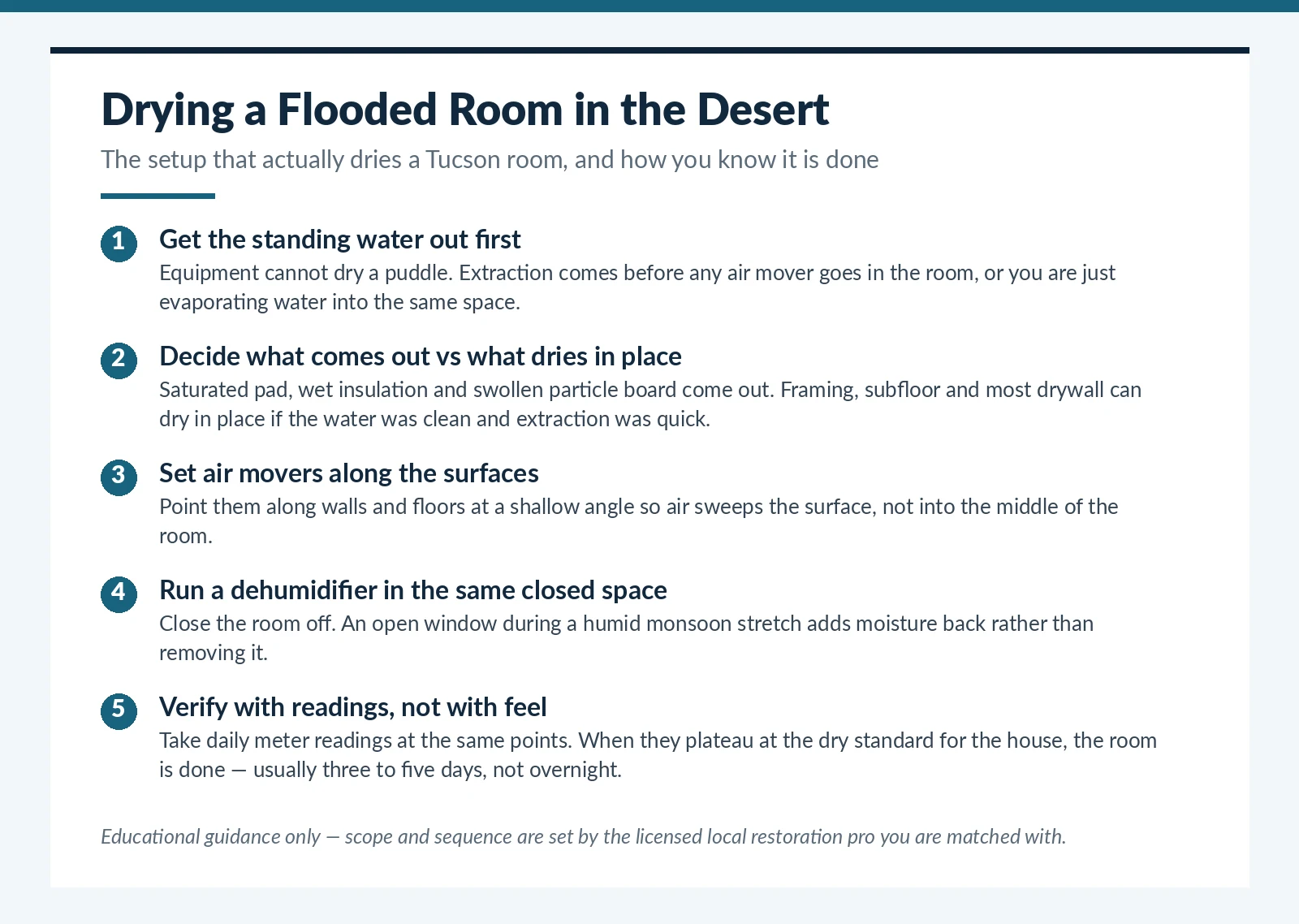
Three things need to happen together: air needs to move across every wet surface (not just circulate generally around the room), the moisture that evaporates off those surfaces needs somewhere to go (a dehumidifier pulling it out of the air, not just a fan pushing humid air around), and the room ideally gets closed off from the rest of the house so you’re not trying to dry the whole home’s worth of air at once. Point box fans directly at wet flooring, walls, and furniture rather than up at the ceiling. Run a dehumidifier sized to the room — a small unit in a large room just runs constantly without keeping up. And skip the swamp cooler in that room during drying; evaporative cooling adds humidity to the air, which is the exact opposite of what a wet room needs.
What Comes Out vs. What Dries in Place
Carpet padding that’s been soaked usually gets pulled and replaced rather than dried — it holds water like a sponge and rarely dries fully in place. Baseboards along a wet wall often get pulled at the bottom few inches so air can reach the drywall and framing behind them directly. Drywall that’s soft, bubbling, or has been wet for more than a day or two at the base may need a section cut out rather than dried, since saturated drywall loses structural integrity. Solid hardwood that’s cupped (edges curling up) can sometimes flatten back out with slow, controlled drying — but rushing it with too much heat can make the cupping permanent.
How Long Real Drying Actually Takes
With proper equipment — commercial air movers and a correctly sized dehumidifier — a single wet room typically dries in 3 to 5 days. With just a couple of household box fans and open windows, the same room can take weeks, and often never fully dries in the materials that matter, even though the surface looks fine within a day or two. The target isn’t “looks dry” — it’s moisture readings in the affected materials back down to a normal baseline compared to an unaffected area of the house.
How to Know It’s Actually Done
Compare a moisture meter reading in the affected material to a reading in an unaffected part of the same house — when they’re close, the material is dry. A musty smell that lingers or gets stronger a few days in is a strong signal that something behind a wall or under a floor is still wet, even if everything visible looks fine.
Why This Matters Beyond Comfort
A room that looks dry but isn’t is exactly the condition mold needs — our guide on why desert homes still get mold after a leak dries out covers what happens when drying stops too early. Verifying with a moisture meter instead of eyeballing it is the difference between a closed chapter and a problem that reopens in a few weeks.
Not sure if a room is actually dry?
Call now and we’ll connect you with a licensed local restoration pro who can moisture-map the room properly instead of guessing. Availability varies with provider schedule and monsoon-season demand.
Frequently asked questions
Can I just use box fans to dry out a flooded room?
Box fans help move air across wet surfaces, but without a dehumidifier pulling moisture out of the air, evaporated water just recirculates in the room. Fans alone are slower and often incomplete for anything beyond a very minor, quickly caught spill.
Why doesn’t Tucson’s dry climate dry out a wet room faster?
Outside air dryness helps surface moisture evaporate quickly, but it does little for moisture trapped inside drywall, padding, or subfloor unless air is actively moved across those materials and pulled out with a dehumidifier.
Should I run my swamp cooler while drying out a room?
No — evaporative cooling adds humidity to the air, which works against drying. Skip it in the affected room until drying is confirmed complete.
How do I know if my carpet padding needs to be replaced?
If it was saturated with any meaningful amount of water, replacing it is almost always the practical choice — padding holds water like a sponge and rarely dries fully or safely in place.
Is a moisture meter something I can use myself?
Basic consumer models exist, but comparing readings correctly and knowing which materials to check takes some practice. A professional assessment gets a reliable answer faster, especially for anything beyond a small, quickly caught leak.
What happens if a room is closed up before it’s fully dry?
Trapped moisture behind drywall, under flooring, or inside insulation becomes the exact condition mold needs, often surfacing as odor or discoloration weeks later even though the room looked fine at the time.
Tucson Restoration Pros is a dispatch and matching service connecting homeowners with independent, licensed water damage and mold restoration professionals. We do not perform restoration work ourselves. We are not affiliated with any government agency. In a life-threatening emergency, call 911.
Leave a Reply