Central AC and Monsoon Humidity: Why Tucson’s Refrigerated-Air Homes Get Mold Too
Quick answer: Most Tucson mold content focuses on swamp coolers, but homes with refrigerated (central) AC aren’t immune. Monsoon humidity pushes dew points from the 20s into the 55–65°F range, which roughly doubles the condensate a central AC system produces. A clogged drain line or a failed overflow switch can back that condensate up into a closet, attic, or ceiling cavity for days before anyone notices — and it’s an entirely different failure point than a swamp cooler leak.
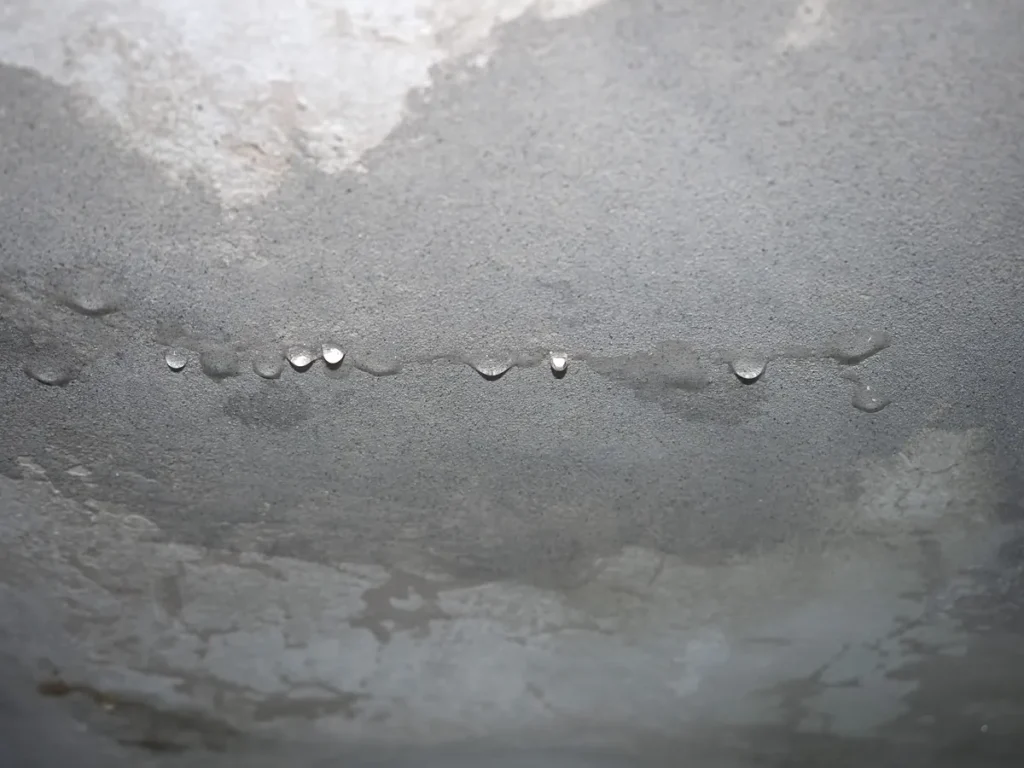
If your Tucson home runs refrigerated air instead of an evaporative cooler, it’s easy to assume monsoon mold risk is someone else’s problem — the swamp cooler crowd’s problem. It isn’t. Central AC systems don’t leak the way a swamp cooler pan does, but they produce condensate constantly while running, and monsoon humidity changes how much of it there is and how fast a small problem becomes a wet one.
Musty smell near a vent, a stained ceiling tile, or water near your air handler? Get connected with a local crew to check it before it spreads.
Check availability →Why does monsoon humidity matter for a system that isn’t evaporative?
A refrigerated AC system cools air by passing it over a cold evaporator coil, which condenses moisture out of the air — that condensate normally drains harmlessly through a line to the outside or a drain pan. How much condensate that is depends directly on how much moisture is in the air to begin with. The National Weather Service’s Tucson office notes that monsoon season brings a sharp jump in dew point, often from the 20s°F in dry pre-monsoon weather into the mid-50s to mid-60s°F once the moisture surge arrives (NWS Tucson monsoon overview). More moisture in the air means more condensate at the coil, running for more hours a day since AC systems work harder in monsoon’s combination of heat and humidity.
What actually fails, and where does the water go?
Three points do most of the damage:
- The condensate drain line — a thin PVC line that’s prone to algae growth and clogging, especially when it’s handling more volume than it does in the dry pre-monsoon months. A clog backs water up toward the drain pan.
- The primary drain pan and safety float switch — the switch is supposed to shut the system down before a pan overflows. When it fails or is missing, an overflowing pan can run for hours before anyone notices, often into a closet, attic floor, or the ceiling below.
- Attic-mounted air handlers — common in single-story Tucson homes, where a pan overflow drips straight into ceiling insulation and drywall, and can go unnoticed until a stain appears on the ceiling below.
How is this different from a swamp cooler leak?
A swamp cooler failure is usually a supply-line or pan leak that shows up as an active drip, often traced to a rooftop unit — our guide on swamp cooler leak water damage in Tucson covers that failure pattern in detail. A central AC condensate problem is slower and quieter: it’s condensation building up inside a line or pan rather than a supply line spraying water, and because the air handler is often tucked in an attic or closet, the first sign is frequently a ceiling stain or a musty smell rather than visible water.
What should you actually check?
| Check point | What to look for |
|---|---|
| Condensate line exit (usually outside near the unit) | Is it actively dripping when the system runs? No drip at all can mean a clog, not that nothing’s happening. |
| Drain pan under the air handler | Standing water, rust, or algae buildup |
| Ceiling below an attic air handler | New staining, soft texture, or sagging |
| Closet housing the indoor unit | Musty smell, damp carpet or flooring nearby |
What does a licensed crew check that you can’t see yourself?
Beyond the visible drain line and pan, a moisture inspection can check whether water has already migrated into insulation, drywall backing, or subfloor near the unit — areas that look fine from the surface but hold moisture long enough to start mold growth. The EPA’s guidance is that materials should be dried within roughly 24–48 hours to limit mold risk (EPA mold and moisture guidance), and that clock starts whether the source was a swamp cooler, a monsoon flood, or a condensate overflow nobody saw happen. If a stain or smell has already shown up, our mold remediation service in Tucson covers containment and removal, and our mold testing and inspection page covers what an independent assessment looks like if you’re not sure yet.
If the water damage is more than staining — a soaked ceiling or insulation that’s visibly wet — our water damage restoration page covers extraction and drying for that side of the job.
Ceiling stain near a vent or attic access? Get matched with a local crew for an assessment, 24/7.
Get connected now →FAQ
Can a central AC system really cause mold, or is that just a swamp cooler problem?
Central AC systems produce condensate continuously while running, and a clogged drain line or a failed overflow switch can let that condensate back up into a pan, closet, or ceiling cavity, which is a real and distinct mold risk from swamp cooler leaks.
Why does monsoon season specifically increase this risk?
Monsoon humidity raises Tucson’s dew point sharply, which increases how much moisture a central AC system condenses out of the air and drains away, meaning more volume moving through the same drain line and pan for more hours per day.
How would I even notice a condensate problem if the air handler is in the attic?
Usually through a ceiling stain below the unit, a musty smell near a vent or the closet housing the indoor unit, or reduced cooling performance if the safety float switch has shut the system down.
Is a dripping condensate line outside the house a problem?
No — that’s usually the system draining normally. The concern is the opposite: no drip at all, which can mean the line is clogged and water is backing up somewhere you can’t see.
Should I run my own dehumidifier if I catch it early?
For a small, recently discovered issue, that can help slow things down. For anything with visible ceiling staining, soft drywall, or a strong musty smell, a moisture inspection is worth getting before assuming a fan solved it.
Tucson Restoration Pros is a dispatch and referral service connecting Tucson-area homeowners with independent, licensed local water damage and mold remediation crews. We are not the service provider and do not perform inspection, extraction, or remediation work ourselves, and availability is not guaranteed.
Leave a Reply