Water Damage in Your Tucson Home? The First 24 Hours That Matter Most
A burst pipe, a monsoon flash flood, a swamp cooler leak dripping through the ceiling — in Tucson, water damage rarely announces itself politely. What happens in the first 24 hours determines whether this is a dry-out-and-move-on situation or a mold-and-drywall problem six weeks from now. Here’s the order that actually matters.
Water actively spreading right now? Get connected with a licensed local water damage crew — 24/7 response.
Check 24/7 availability →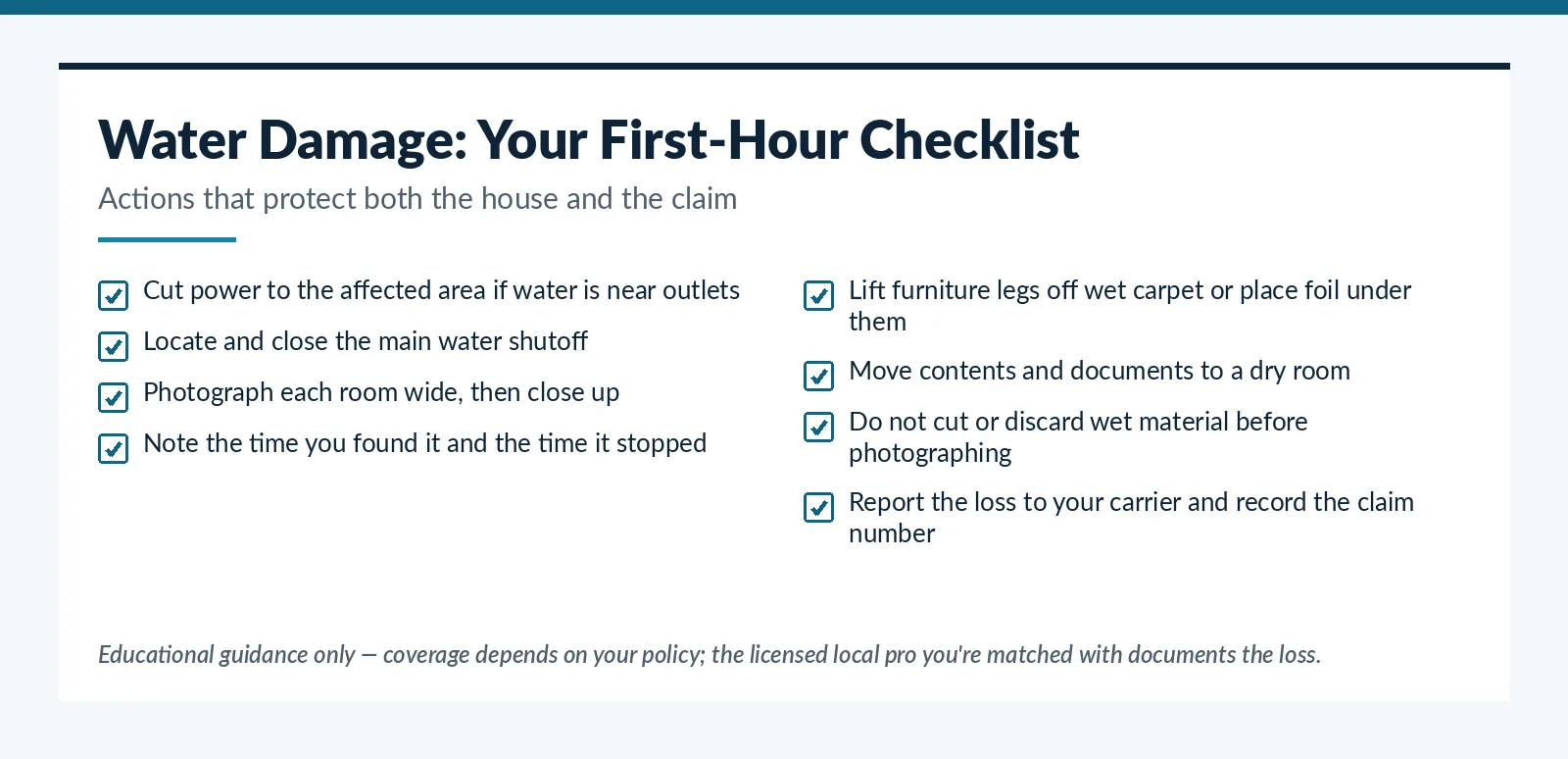
Hour 1: Stop the source, then get people and pets clear
If it’s a plumbing failure, shut off the water at the fixture stop or the main. If it’s monsoon flooding coming in from outside, move anything valuable off the floor and out of the path. Standing water near outlets or a breaker panel is a real hazard — don’t wade through it. If the water is anywhere near electrical, cut power to that area at the breaker before doing anything else.
Hours 1–3: Document everything before you touch it
Photograph and video the water line on walls, the source if you can identify it, and anything damaged — furniture, flooring, drywall, ceiling stains from a swamp cooler leak. This is the record your insurance carrier will use to evaluate the claim, and category of water (clean, gray, or black) affects both the health risk and what a carrier will cover. Timestamp everything; most phones do this automatically.
Why category matters
- Category 1 (clean) — a supply line or fresh water source. Lowest health risk, but still needs to be dried out fast.
- Category 2 (gray) — washing machine overflow, dishwasher discharge, a swamp cooler pan. Contains some contaminants.
- Category 3 (black) — sewage backup or flood water from outside. Treat as a biohazard and don’t handle it without protection.
Hours 3–24: Get airflow and moisture control started
In Tucson’s climate, standing water and wet materials can start supporting mold growth within roughly 24 to 48 hours, especially indoors where humidity gets trapped. Open windows if outdoor conditions allow, run fans across wet flooring, and pull up rugs or anything holding standing water. This buys time, but it doesn’t replace commercial-grade extraction and drying equipment for anything beyond a small spill — carpet padding and drywall hold moisture long after the surface looks dry.
Ceiling stain, flooded floor, or a swamp cooler leak that won’t stop? A licensed local crew can assess it and start extraction the same visit.
Get connected now →Monsoon season specifics
Flash flooding during Tucson’s monsoon season (roughly June through September) brings a different problem than a plumbing leak: water entering from outside, often carrying dirt, debris, and potential contaminants, and it can arrive faster than a slow indoor leak. If water entered from a flash flood, treat it as at least Category 2 until you know otherwise, and get a crew out to assess extent before mold has a chance to establish in wall cavities and subflooring.
Swamp cooler leaks — Tucson’s quiet culprit
Evaporative cooler leaks are one of the most common sources of water damage across Tucson, Oro Valley, Marana, and the Catalina Foothills, and they’re often slow and easy to miss until a ceiling stain shows up. A pan that’s rusted through, a supply line that’s worked loose, or a drain line that’s clogged can drip for weeks before anyone notices. If you’re seeing a ceiling stain that keeps reappearing, it’s worth having it looked at before monsoon season adds volume to whatever’s already leaking.
What a licensed water damage crew actually does
Extraction of standing water, moisture mapping with meters to find out how far it traveled inside walls and under flooring, industrial air movers and dehumidifiers, and a mold-risk assessment once materials are dry. Our emergency water damage service in Tucson page covers the full 24/7 response process in more detail, including what to expect on the first visit.
| What happened | Category | What matters most |
|---|---|---|
| Burst supply line | Clean (1) | Shut off water, extract fast |
| Swamp cooler pan/line leak | Gray (2) | Find the source, don’t just dry the stain |
| Monsoon flash flood intrusion | Gray to black (2–3) | Treat as contaminated until assessed |
| Sewage backup | Black (3) | Biohazard — don’t handle without protection |
What your insurance carrier will want
- Timestamped photos and video from before anything was moved or dried
- A clear description of the source and when it was discovered
- An itemized scope of extraction, drying, and any repair from whoever does the work
- Moisture readings showing the affected area was verified dry before repairs began
Whether your policy covers a given loss depends on the source and your specific policy language — our guide on whether insurance covers water damage in Tucson walks through the common scenarios.
For water and mold damage response across the Tucson metro — Oro Valley, Marana, Sahuarita, Vail, Green Valley, the Catalina Foothills — the Tucson Restoration Pros dispatch network connects homeowners with licensed local crews around the clock.
FAQ
How fast does mold start growing after water damage?
In Tucson’s climate, mold can begin developing on wet materials within roughly 24 to 48 hours indoors where moisture gets trapped, which is why fast extraction and drying matter more than how the water got there.
Is a swamp cooler leak really water damage, or just maintenance?
If it’s been dripping long enough to stain a ceiling or wet insulation and framing, it’s water damage that needs proper drying and a moisture check, not just a wipe-down.
What’s the difference between Category 1, 2, and 3 water?
Category 1 is clean water from a supply line, Category 2 carries some contamination like appliance discharge, and Category 3 is sewage or flood water and should be treated as a biohazard.
Should I run my own fans and a dehumidifier before anyone arrives?
Yes, for a small spill that helps. For anything beyond that, wet carpet padding and drywall hold moisture well past the point where the surface looks dry, which is where commercial extraction and drying equipment matters.
Does monsoon flood damage get treated differently than a plumbing leak?
Yes. Flood water entering from outside can carry dirt and contaminants and is generally treated as at least Category 2 until assessed, versus a clean supply-line leak.
Tucson Restoration Pros is a dispatch and referral service connecting Tucson-area homeowners with independent, licensed local water damage and restoration crews. We are not the service provider and do not perform extraction, drying, or repair work ourselves, and availability is not guaranteed.
Leave a Reply