Why Tucson’s Evaporative Cooler Ducts Are a Hidden Mold Risk After Monsoon Humidity Spikes
Evaporative coolers – swamp coolers – are a Tucson fixture precisely because they work so well in dry desert heat. But the same humidity spike that makes monsoon season feel briefly tropical also creates a window where an evaporative cooler’s ductwork can turn from a dry-climate advantage into a genuine mold risk.
Tucson Restoration Pros is a referral service connecting Tucson-area homeowners with independent, licensed local water and mold damage restoration companies – we do not perform restoration work ourselves. This guide covers why swamp cooler ducts are a specific, often-overlooked mold risk during and after monsoon season.
Why Evaporative Coolers Are Different From Standard AC Ducts
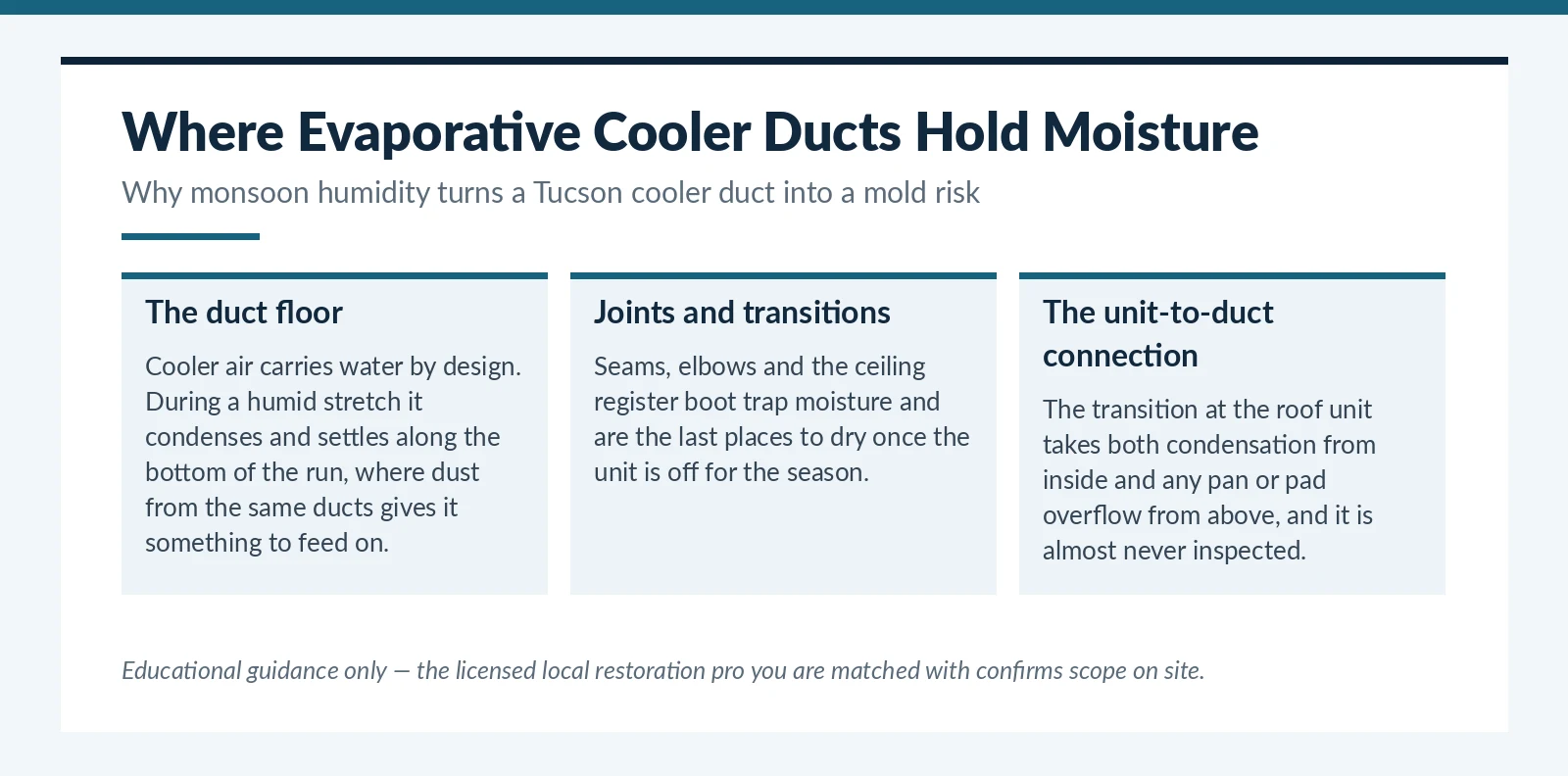
A swamp cooler works by pulling outside air through water-saturated pads, cooling it through evaporation before pushing it into the home’s ductwork. That means the system is designed around introducing moist air on purpose – a fundamentally different setup than a standard refrigerant AC system, which removes humidity as part of the cooling process. In Tucson’s normal dry heat, that moisture evaporates quickly and causes no issue. During monsoon season, when outside humidity climbs well above what the system was designed around, the ducts and cooler cabinet itself can stay damp longer than usual.
Where the Moisture Actually Collects
The cooler pads and cabinet
Cooling pads that are already saturated by design pick up even more ambient moisture during a humid monsoon stretch, and a cabinet that normally dries out between run cycles may not fully dry when overnight humidity stays elevated.
Duct interiors near the cooler connection
The section of ductwork closest to the cooler unit sees the most direct moist airflow, and any dust or debris already sitting in that ductwork gives mold spores exactly the organic material they need once conditions are damp enough for long enough.
Attic-run ducts in general
Many Tucson homes route evaporative cooler ductwork through the attic, where summer heat cycling already stresses duct seals – and a seal that has loosened over the years can let humid air condense in spots it was never meant to reach.
Why This Often Goes Unnoticed
Because the moisture involved is airborne and distributed through ductwork rather than pooling visibly the way a roof leak does, homeowners frequently do not connect a musty smell from the vents to the swamp cooler itself. A slightly stale or musty odor when the cooler first kicks on after a humid stretch is a common early sign that gets dismissed rather than investigated, in part because it can seem to clear up once the system runs a while. That does not mean the underlying moisture in the ductwork resolved – it often means it is just not detectable by smell at that moment.
What to Check After a Humid Monsoon Stretch
- A musty or stale smell specifically when the evaporative cooler starts, rather than a general house smell
- Visible discoloration or dark spotting on the cooler pads or cabinet interior
- Any soft or discolored drywall near where attic ductwork penetrates a ceiling
- A noticeable increase in allergy-type symptoms that seem tied to when the cooler is running
None of these are something to diagnose by smell alone. If you have reason to think moisture has become a mold issue rather than a passing damp smell, our guide on mold after monsoon flooding covers why a space that seems to have dried out is not automatically safe, and the same principle applies inside ductwork as it does inside a wall cavity.
Get Connected to a Tucson Assessment Crew
If a musty smell or visible discoloration around your evaporative cooler system has you concerned about mold, call now and we will connect you with a licensed local restoration company that can properly assess it.
Frequently Asked Questions
Can a swamp cooler actually cause mold inside my home?
It can contribute to conditions that support mold growth, particularly during unusually humid stretches like monsoon season, when the moisture the system introduces does not evaporate as quickly as it does in normal dry heat.
Is a musty smell from my vents always mold?
Not necessarily, but a musty smell specifically tied to when the evaporative cooler starts running is worth investigating rather than dismissing, especially after a humid monsoon week.
Should I run my swamp cooler less during monsoon season?
Many Tucson homeowners switch to standard AC during the most humid monsoon stretches, since evaporative cooling is less effective and the added humidity load is exactly the condition described here. That said, equipment decisions depend on your specific system and setup.
Does this affect standard refrigerant AC systems the same way?
Less so. Standard AC systems remove humidity as part of normal operation rather than introducing moist air, so the specific mold-risk mechanism described here is more particular to evaporative cooling systems.
How do I know if ductwork mold needs professional remediation?
Visible discoloration, a persistent musty smell that does not resolve, or any related health symptoms among household members are reasons to get a professional assessment rather than attempt to clean it yourself.
Tucson Restoration Pros is a referral service connecting Tucson-area homeowners with independent, licensed local water and mold damage restoration companies. We are not a restoration contractor and do not perform repair or restoration work ourselves.
Leave a Reply