Monsoon Flooding Tucson: Your First 48 Hours
House Flooded During a Monsoon Storm? The First 48 Hours for Tucson Homeowners
Quick answer: Tucson’s monsoon season runs mid-June through September 30, and a single storm can drop more rain in an hour than the desert ground can absorb, sending water into homes fast. The first 48 hours matter most: get people safe, document the damage, remove standing water, and start air movement immediately. Mold can begin growing in as little as 24 to 48 hours on wet material, so speed — not perfection — is what limits long-term damage.
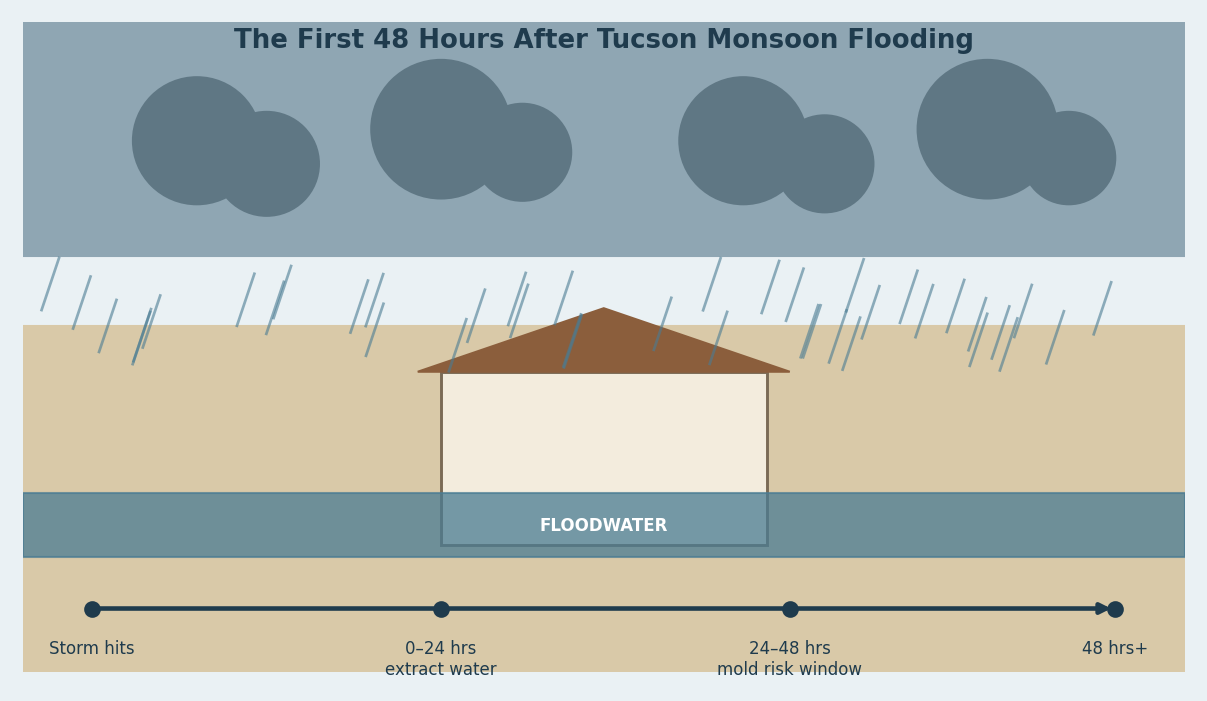
Why Tucson Flooding Happens So Fast
Arizona’s monsoon isn’t a single storm — it’s a season. NWS Tucson tracks the North American Monsoon officially from June 15 through September 30, and the storms that define it are short, intense, and highly localized. A neighborhood can get an inch of rain in twenty minutes while a few miles away stays dry. Tucson’s desert soil, hard-packed clay in many areas and often compacted further by development, doesn’t absorb water quickly, so a burst of rain runs off the surface instead of soaking in. That runoff collects in washes, streets, and low points around a house faster than most people expect from a “quick” summer storm.
This is also why flash flooding, not the storm itself, causes most of the property damage: water entering through a garage door, seeping under an exterior door threshold, or backing up around a foundation where grading slopes toward the house rather than away from it.
“Regional water management strategies related to rainwater harvesting and stormwater management allow and encourage residents to collect roof and street runoff, which reduces peak flows in washes.”— Jamie McEvoy, Associate Director, University of Arizona Water Resources Research Center
Hour by Hour: What to Actually Do
First — Safety Before Anything Else
Don’t wade through standing water if there’s any chance it’s in contact with electrical outlets, appliances, or a breaker panel. If it’s safe to do so, shut off power to the affected area at the breaker. Keep kids and pets out of flooded rooms until the water is gone and the area has been checked.
0–6 Hours: Document, Then Start Removing Water
Photograph and video everything before you move anything — flooring, baseboards, furniture, the water line on walls. This documentation matters for any insurance claim later. Once that’s done, start removing standing water: a wet-dry vacuum works for smaller areas; a sump pump or professional extraction is usually needed for anything beyond a few inches. The faster standing water is gone, the less time it has to soak into drywall, subflooring, and insulation.
6–24 Hours: Get Air Moving
Open windows if outdoor humidity allows, and run fans and a dehumidifier if you have one. Pull up wet carpet padding — it rarely dries fast enough to save, and it holds moisture against subflooring longer than almost anything else in a flooded room. Move furniture off wet flooring and remove anything porous (cardboard boxes, area rugs, upholstered items) that’s been sitting in water.
24–48 Hours: The Mold-Risk Window
This is the window that matters most. According to the EPA’s guidance on mold cleanup, mold can begin growing on wet materials within 24 to 48 hours. Anything still damp at this point — inside wall cavities, under flooring, behind baseboards — is at real risk of becoming a mold problem even if the visible surface looks dry. This is usually the point where moisture meters and thermal imaging matter more than what’s visible to the eye, because trapped moisture behind a wall doesn’t show up until it’s already a problem.
What to Do If You Can’t Get to Everything Fast Enough
Not every homeowner can pull up carpet, run fans, and document damage all within the first few hours, especially if a storm hits overnight or while you’re away. If more than 24 hours has passed since water entered your home, don’t assume it’s too late — but treat drying as more urgent, not less. Getting monsoon flood cleanup started in Tucson quickly connects you with the licensed local restoration pro you’re matched with, who can bring moisture meters and commercial air movers to reach water that’s already worked its way into wall cavities or under flooring — areas a household wet-dry vac and box fans generally can’t fully address.
For ongoing prevention once your home is dry, the site’s monsoon flood and mold prevention guide covers grading, drainage, and seasonal prep specific to Tucson properties. And if insurance is part of your next step, this breakdown of Arizona flood insurance coverage explains what standard homeowners policies typically do and don’t include for monsoon-related water damage.
Monsoon Flooding FAQs for Tucson Homeowners
How long does Tucson’s monsoon season actually last?
NWS Tucson defines the official monsoon season as June 15 through September 30, though the heaviest storm activity typically clusters in July and August.
Is it normal for a dry Tucson yard to flood this fast?
Yes. Compacted desert soil doesn’t absorb sudden heavy rain well, so runoff collects and moves toward low points — including house foundations — much faster than soil in wetter climates would allow.
Can I just let a flooded room air dry on its own?
Passive air drying alone is rarely fast enough to beat the 24-to-48-hour mold-growth window the EPA describes, especially for anything absorbed into drywall, subflooring, or insulation rather than sitting on a hard surface.
Should I throw out flooded carpet padding?
In most cases, yes — padding holds water against the subfloor and is difficult to fully dry in place, which is why it’s commonly removed even when the carpet itself might be salvageable.
Need help now? Dealing with this in your home right now? See flood damage restoration, 24/7 emergency water removal or mold remediation in Tucson — free 24/7 dispatch to a licensed local company, or call (866) 695-5058.
Leave a Reply