Mold Clearance Testing in Tucson: How to Read the Protocol
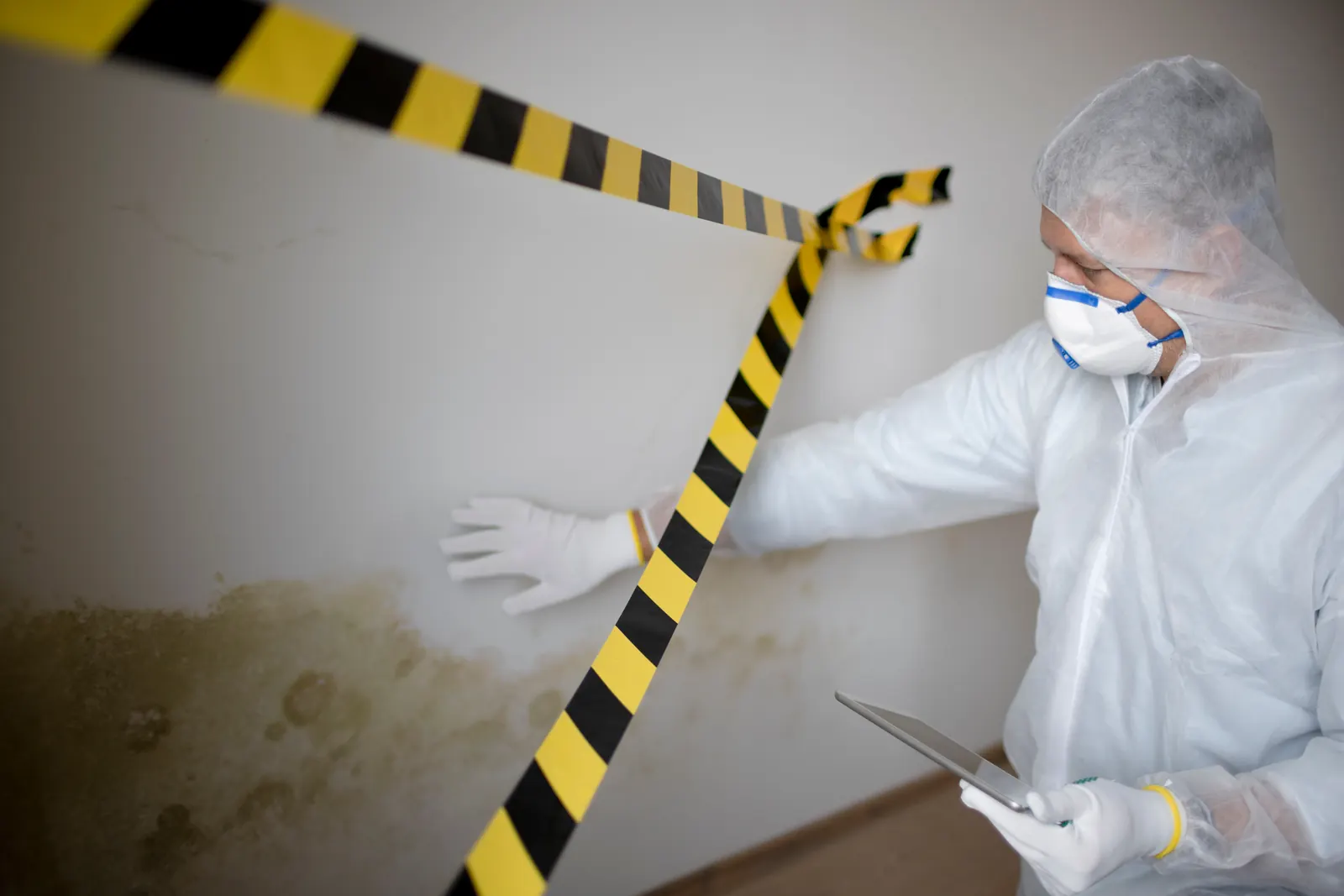
Mold clearance testing is the independent check done after mold remediation and before anyone hangs new drywall. In Tucson it usually means three things: a visual inspection of the work area, moisture readings on what stayed in place, and often air samples compared against an outdoor sample taken during the same visit. Local inspectors typically quote roughly $300 to $900 per visit. The part most homeowners miss is that the definition of “pass” should be written into the remediation protocol before the first piece of drywall comes out.
Protocol, bid, and clearance report: three different documents
People use these words interchangeably, and that’s how jobs go sideways.
- The protocol is the written remediation plan, ideally prepared by an inspector. It says where the growth is, how much material comes out, what level of containment is needed, and what has to be true at the end.
- The bid or scope is the contractor’s price to carry out that plan.
- The clearance report is the inspector’s written result after the work, measured against the criteria in the protocol.
Arizona doesn’t issue a separate state license for mold inspectors or mold remediators, so credentials come from training bodies like the IICRC and ACAC. That makes a clear written protocol your main quality control. If a contractor hands you a one-line bid that says “remediate mold in hall bath,” there’s nothing to clear against.
How to read a mold remediation protocol, section by section
1. The moisture source, and how it was confirmed
It should name the cause specifically: a swamp cooler pan overflow, a parapet seam on a flat roof, a condensate line, a supply line. If the source isn’t fixed, the room can pass clearance in October and grow again by next monsoon.
2. Affected areas, mapped and measured
Look for room-by-room detail, like “lower two feet of drywall, north wall, hallway bath, about 24 sq ft,” rather than a single total. Vague areas make it impossible to tell later whether everything was addressed.
3. Containment level
Plastic barriers, zipper doors, and a HEPA negative air machine for anything bigger than a small patch. In a Tucson house, the protocol should also say the swamp cooler and central air stay off and their registers stay sealed until clearance. If you want to eyeball it yourself, here’s what proper containment looks like.
4. Removal, cleaning, and drying
Porous materials with growth, like drywall, insulation, and carpet pad, come out. What stays gets HEPA-vacuumed and damp-wiped. The drying goal should be written as moisture readings that match unaffected material of the same type elsewhere in the house, not “until dry.”
5. Clearance criteria
This is the section that matters most, and the one most often missing. It should spell out who does the clearance, what gets sampled, and what counts as a pass, before the work starts. Nobody should be inventing the finish line after the race.
Need a mold inspection or clearance check in Tucson? Get connected with an independent local inspector.
Tap to call (866) 695-5058Tap to reach the 24/7 dispatch line. Free to call, no obligation. The inspector sets the price.
What “passing” usually looks like
- Visual: no visible growth, and no dust or debris left inside containment. Inspectors run a hand or a white wipe along ledges and framing.
- Moisture: framing, subfloor, and remaining drywall read at the documented dry standard.
- Air sampling, when used: indoor spore-trap results that look like the outdoor sample from the same visit, without elevated levels of water-damage indicator types such as Stachybotrys or Chaetomium indoors.
In the IICRC S520 standard’s terms, the goal is Condition 1, a normal fungal ecology for the building. There’s no single magic number. The EPA notes that no federal standards have been set for airborne mold concentrations, and Arizona hasn’t set one either. Clearance is judged by comparison.
The Tucson wrinkle: outdoor air changes
Outdoor spore levels shift with weather. Rain, wind, and season all change what’s floating around outside, and Tucson can swing from monsoon humidity to bone-dry fall air within a few weeks. That’s exactly why the outdoor control has to be taken during the same visit as the indoor samples, not borrowed from an earlier visit. If a report compares this week’s indoor air to an outdoor sample from August, ask why.
Timing matters inside, too. Clearance should happen with containment still up and before the rebuild, so a failed area can be re-cleaned without tearing out brand-new drywall. And keep the cooler and AC off until the inspector says otherwise.
Who should do it, and what happens if it fails
Arizona doesn’t prohibit one company from both remediating and testing, but an independent inspector removes the obvious conflict of a contractor grading its own work. If an area fails, the usual path is re-cleaning, more drying if anything still reads wet, and a retest. Lab results commonly come back within a few business days. Before you sign, get in writing who pays for re-cleaning and the retest if the first clearance fails.
When clearance testing is worth it, and when to skip it
For a small job, say a bathroom ceiling patch under 10 square feet, a careful visual and moisture check is usually enough. Clearance testing earns its cost when the job is large, the swamp cooler or HVAC ducts were involved, someone in the home has asthma or a mold sensitivity, you’re selling or renting the property, or the problem already came back once. Our mold testing and inspection page covers the before-remediation side, and our main guide explains how mold remediation works in Tucson from containment through rebuild.
FAQ
What is mold clearance testing?
Clearance testing, also called post-remediation verification, is the check done after mold remediation and before the walls are closed up. It usually combines a visual inspection, moisture readings on the materials that stayed, and often air samples compared against an outdoor sample taken during the same visit, to confirm the area is back to a normal background condition.
How much does mold clearance testing cost in Tucson?
Local inspectors typically quote roughly $300 to $900 per clearance visit, depending on how many areas are sampled. Lab samples are often billed individually at about $75 to $150 each. These are general ranges; your quote comes from the inspector.
Who should do clearance testing after mold remediation?
Ideally an inspector who is independent of the company that did the remediation. Arizona does not prohibit one company from doing both, but when the same firm sizes the job, does the work, and grades the result, you lose the second set of eyes that clearance testing is supposed to provide.
What happens if a room fails clearance testing?
Normally the remediation contractor re-cleans the area, dries anything still reading wet, and the inspector samples again. Get it in writing before work starts who pays for re-cleaning and the retest if the first clearance fails, because contracts handle that differently.
Is there a legal mold spore limit a Tucson home has to meet?
No. The EPA notes that no federal standards or threshold limits have been set for airborne mold or spores, and Arizona has not set one either. That is why clearance is judged by comparison, mainly indoor results against an outdoor sample from the same visit, plus visual and moisture checks.
Want a second set of eyes before the walls go back up? Get connected with a licensed local mold pro serving Tucson, Oro Valley, Marana, and the Catalina Foothills.
Tap to call (866) 695-5058Call to get connected with a licensed local mold pro. Your quote is between you and the pro.
Tucson Restoration Pros is a dispatch and referral service connecting homeowners with independent, licensed local water and mold restoration companies across Tucson & Southern Arizona. We are not a licensed restoration contractor and do not perform restoration work ourselves.
Leave a Reply