Free live match · ROC-licensed pros 📞 (866) 695-5058
Looking for fast water damage restoration, mold remediation, or emergency flood cleanup near me in Vail, AZ (85641)? Properties near Colossal Cave Road, Houghton Road corridor, Cienega High School, and Rincon Creek face unique Sonoran Desert moisture risks—including overnight winter pipe freezes in uninsulated garages and exterior hose bibs, Pantano Wash and Cienega Creek flash-flood silt, and wind-driven monsoon roof leaks. Tucson Restoration Pros provides free 24/7 live dispatch connecting Vail homeowners with independent, Arizona ROC-licensed and IICRC S500/S520 certified restoration crews.
Need a Licensed Crew in Vail, AZ (85641)?
Before you call — have ready: (1) Your 5-digit ZIP code, (2) What got wet or damaged, and (3) When it started.
Free live match · ROC-licensed pros 📞 (866) 695-5058
Sewage Backup Cleanup in Vail, AZ
Most Vail homes run on a private septic system, not a municipal sewer main — so a backup usually starts in the tank or drain field, not the street. Call now and we’ll connect you with a local crew, 24/7.
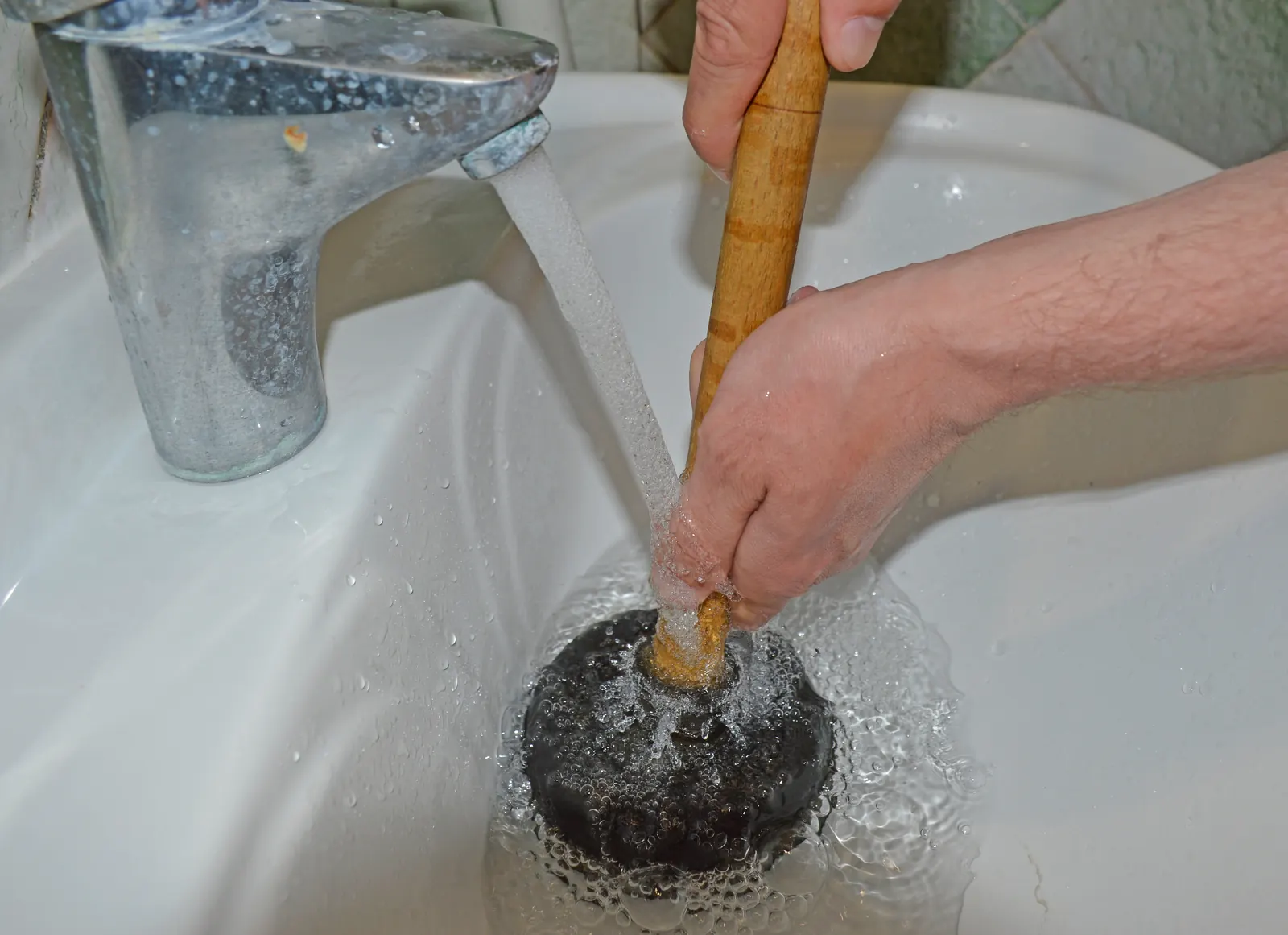
Quick answer: Most Vail sewage backups start at the septic tank or a failing leach field, pushing Category 3 water into tubs and floor drains. Stop water use immediately, keep everyone away from contact, and get matched with a licensed local septic-experienced cleanup crew, 24/7.
Get Connected in Minutes
Call now and tell us code and we’ll connect you with a local, independent sewage backup cleanup crew serving Vail and the Rincon Valley.
📞 Call Now — (866) 695-5058No cost to use this service. We connect you — independent local companies perform the work.
Why Do Sewage Backups in Vail Usually Start at the Septic Tank?
Tucson Restoration Pros is a dispatch and referral service. We connect Vail homeowners with independent, licensed local sewage cleanup companies that carry their own insurance and perform the actual mitigation — we are not a contractor and do not do the work ourselves. Sewage backup, sometimes called black water or category 3 water intrusion, involves contaminated water and requires a different response than a clean-water leak — it is not a job for standard household cleanup.
Vail sits well outside Tucson’s core municipal sewer service area. Much of the rural acreage stretching along Colossal Cave Road, Marsh Station Road, and the Cienega Creek corridor is zoned for large lots on private wells and private septic systems rather than a connection to a city sewer main. That distinction matters: when a Vail homeowner experiences a “sewage backup,” the failure point is almost always the septic tank or the leach/drain field on the property, not a municipal line surcharging during a storm the way it might in a denser, sewer-connected part of Tucson. A tank that hasn’t been pumped on schedule, a drain field saturated after a heavy monsoon storm, or root intrusion from mesquite and palo verde trees into aging septic lateral lines can all cause effluent to back up into household drains instead of flowing out to the tank as designed.
Newer HOA phases vs. rural acreage septic
Vail’s newer master-planned phases — sections of Del Webb at Rincon Valley and other more recently platted subdivisions closer to Colossal Cave Road — are more likely to sit on shared or community wastewater systems with more consistent maintenance schedules. Older rural acreage properties further out toward Marsh Station and Pistol Hill Road are more likely to be on decades-old individual septic systems that a current owner may not have a full maintenance history for, which raises the odds of an overdue pump-out or an aging drain field being the root cause of a backup.
Why a saturated drain field behaves differently than a sewer surcharge
A municipal sewer backup is typically a temporary event tied to a storm or a blockage that clears once the main line has capacity again. A saturated or failing septic drain field is a different problem: if the soil around the field is waterlogged from monsoon rain or the field itself has reached the end of its usable life, wastewater has nowhere to go and will keep backing up into the house until the field is addressed — not just the plumbing inside the home.
Signs of a Septic or Sewage Backup in a Vail Home
- Slow-draining sinks, tubs, or toilets throughout the house, worsening over several days
- A sewage odor near the lowest-elevation drains, or a soggy, foul-smelling patch of yard over the septic tank or drain field
- Gurgling drains, especially after a heavy monsoon storm has saturated the ground around the drain field
- Multiple fixtures backing up at the same time, which usually points to the septic tank or main line rather than one isolated drain
- Visible gray or brown standing water with an unmistakable odor inside the home
What Happens After You Get Connected
Call now and tell us & the issue
A quick form — no phone tag, no hold music. Let us know whether you’re on septic or municipal sewer and which fixtures are affected.
Get matched locally
We connect you with an independent, licensed sewage cleanup company already working in the Vail/Rincon Valley area, equipped for category 3 water response on both septic and sewer systems.
Extraction, disinfection & drying
The local crew extracts contaminated water, removes and disposes of unsalvageable materials, disinfects affected areas, and documents the loss for your insurance file.
Sewage or septic backup in your Vail home right now?
Category 3 water needs a fast, properly-equipped response. Call now and get connected with a local crew today.
Insurance, Septic Coverage & What Vail Homeowners Typically Encounter
Septic system failures are often treated differently than municipal sewer backups on a homeowners policy, and coverage can depend on whether the backup was sudden and accidental versus the result of deferred maintenance like an overdue pump-out. A separate sewer/septic backup endorsement is frequently required for either scenario to be covered at all, so reviewing policy language early — or asking the independent crew you’re connected with to help identify what documentation your insurer will want — matters from the start. Because contaminated water sitting in a warm space can support mold growth within 24 to 48 hours, a quick response also reduces the risk of needing separate mold remediation on top of the cleanup itself.
Costs for septic or sewage backup cleanup vary based on the extent of contamination, how many rooms are affected, and whether structural materials need to be removed and replaced rather than dried. Industry data generally places category 3 water cleanup toward the higher end of the water-damage cost spectrum given the disposal and disinfection requirements involved. This range reflects the broader restoration industry, not a quote from Tucson Restoration Pros or any company we connect you with — your local crew will assess your specific situation on-site.
Frequently Asked Questions
Is a Vail sewage backup usually a septic problem or a city sewer problem?
Can monsoon rain cause a septic backup in Vail?
Is septic backup covered by homeowners insurance?
How do I know if my septic tank needs to be pumped?
Can I clean up a septic or sewage backup myself?
How fast does mold develop after a sewage backup?
Do you send a technician to my house?
Local Housing Stock, Soil & Water-Damage Failure Modes in Vail, AZ (85641)
Restoration scoping in Vail (85641) requires local familiarity with properties around Colossal Cave Road, Houghton Road corridor, Cienega High School, and Rincon Creek. Unlike national template guides, local IICRC-certified technicians inspecting Vail homes evaluate three neighborhood-specific variables first:
- Local Architecture & Wall Assemblies: Vail features newer ranch and two-story homes in Rita Ranch, Civano, and Rincon Valley set at 3,200+ ft elevation. Drying these materials to the IICRC S500 target moisture standard requires calibrated LGR dehumidifiers and penetrating moisture meters so moisture doesn’t remain trapped behind stucco, baseboards, or caliche-backed slabs.
- Primary Vail Loss Drivers: Dispatch calls in ZIP codes 85641 most frequently involve overnight winter pipe freezes in uninsulated garages and exterior hose bibs, Pantano Wash and Cienega Creek flash-flood silt, and wind-driven monsoon roof leaks.
- The 24–48 Hour EPA Mold Clock in Pima County: Even when outdoor Sonoran Desert humidity drops below 15%, wet drywall cavities and subflooring inside air-conditioned Vail homes maintain 80%+ relative humidity—allowing Aspergillus and Stachybotrys spores to colonize within 24 to 48 hours if professional water mitigation is delayed.
Need an on-site moisture inspection in Vail (85641)? Call (866) 695-5058 24/7 for free live matching with an Arizona ROC-licensed restoration crew serving Vail.
Frequently Asked Questions About Vail, AZ Water & Mold Restoration
Does homeowners insurance cover water damage from a swamp cooler or pipe leak in Vail, AZ?
Yes, standard Arizona HO-3 homeowners insurance policies typically cover sudden and accidental water damage in Vail—including burst supply pipes, water heater ruptures, and sudden evaporative (swamp) cooler line breaks. You generally pay only your policy deductible ($500–$1,000) when professional IICRC S500 extraction starts within 24–48 hours.
How much does water damage restoration cost in Vail, AZ (85641)?
In Vail, AZ (85641), professional water mitigation and structural drying typically range from $1,200 to $3,800 for a single-room Category 1 clean-water leak, and $4,000 to $9,500+ for multi-room Category 2 or Category 3 sewage or monsoon flood losses built in Xactimate.
How fast does mold grow after a water leak in a Vail home?
Per the U.S. EPA, mold can begin colonizing damp drywall, baseboards, and insulation within 24 to 48 hours of water exposure in a Vail home. Because desert air dries only the surface while wall cavities stay humid, professional dehumidification and moisture mapping are essential.
How do I verify a restoration contractor's license in Vail and Pima County?
Every restoration contractor performing structural work in Vail and Pima County must hold an active license with the Arizona Registrar of Contractors (ROC). Before signing a work authorization, verify the company's license number online at roc.az.gov and confirm active general liability insurance.
Have an active leak or mold question in Vail? Call (866) 695-5058 24/7 for a free live connection to a licensed local restoration specialist.
Flash Runoff, Hard Water & Structural Drying in Vail, AZ
Positioned along the I-10 southeast corridor, Colossal Cave Road, Wentworth Road, and Rincon Valley, residential properties across Vail border Pantano Wash, Cienega Creek, and Rincon Mountain foothill arroyos. During intense late-summer monsoon cloudbursts and winter frontal rains, desert bajada channels carry heavy sheet flow across impermeable caliche layers, testing perimeter masonry walls, recessed garage thresholds, and foundation stem walls throughout 85641.
Neighborhood housing stock in Vail consists primarily of modern slab-on-grade suburban subdivisions and custom acreage properties served by high-pressure water mains or private wells. Beyond seasonal storm runoff, homeowners and property managers here routinely face monsoon flash sheet flow over impermeable caliche beds, failed pressure-reducing valves bursting appliance hoses, and winter spigot freezes. At 3,200+ feet elevation, Vail experiences sharper winter overnight freezes and heavy mineral scaling inside domestic hot-water heaters. Without commercial extraction, moisture wicks rapidly up drywall cores and warps baseboards across adjoining rooms.
Fast structural drying prevents secondary framing damage and insurance disputes. Every Vail dispatch is backed by our primary water damage restoration in Tucson, AZ and mold remediation in Tucson, AZ specialists, who provide complete Xactimate moisture logs. Dial (866) 695-5058 any hour for 60-minute local response. Our IICRC-certified Tucson restoration technicians also monitor Pima County Regional Flood Control District gauges and local psychrometric moisture baselines across Vail year-round for rapid structural stabilization.
Local Hydrological, Psychrometric & Restoration Benchmarks: Vail, AZ
| Local Engineering / Restoration Factor | Vail (85641) Field Specification |
|---|---|
| Primary Watershed & Wash Corridor | Pantano Wash, Cienega Creek, and Rincon Mountain foothill arroyos |
| Dominant Wall & Foundation Assembly | modern slab-on-grade suburban subdivisions and custom acreage properties served by high-pressure water mains or private wells over dense Sonoran caliche hardpan |
| Leading Local Water / Mold Triggers | monsoon flash sheet flow over impermeable caliche beds, failed pressure-reducing valves bursting appliance hoses, and winter spigot freezes |
| Local Water Hardness & Pipe Scale Factor | 210–350 ppm CaCO₃ (12–20 gpg) — accelerates water heater tank & copper valve failure |
| IICRC S500 / S520 Target Dry Standard | < 16% Wood Moisture Equivalent (WME) & < 35 GPP indoor humidity within 24–48 hrs |
| Typical Pima County Xactimate Range | $1,400–$3,800 (Cat 1 Clean Extraction) | $3,500–$8,500+ (Cat 2/3 Flood, Sewage or Mold) — Call (866) 695-5058 |
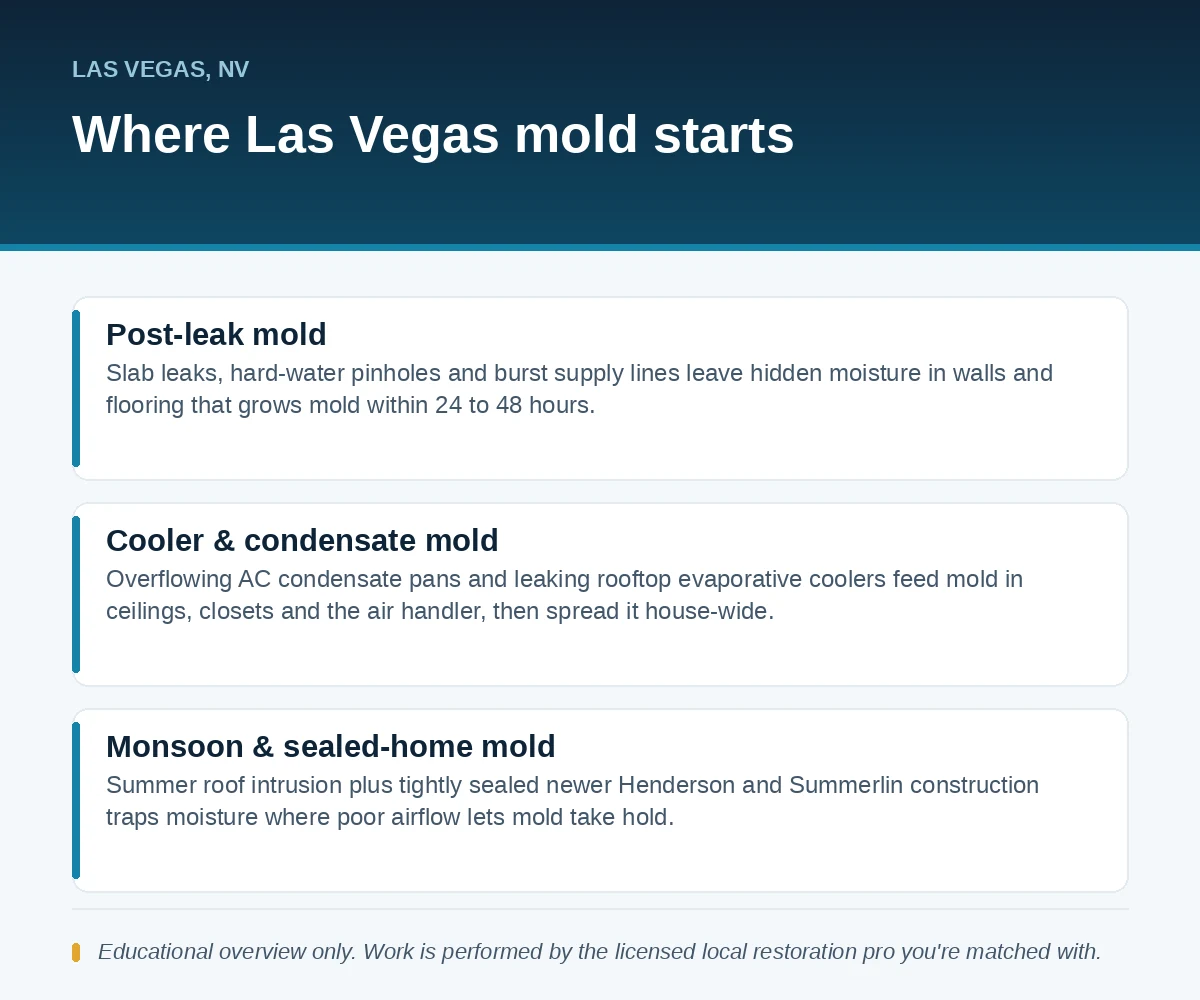
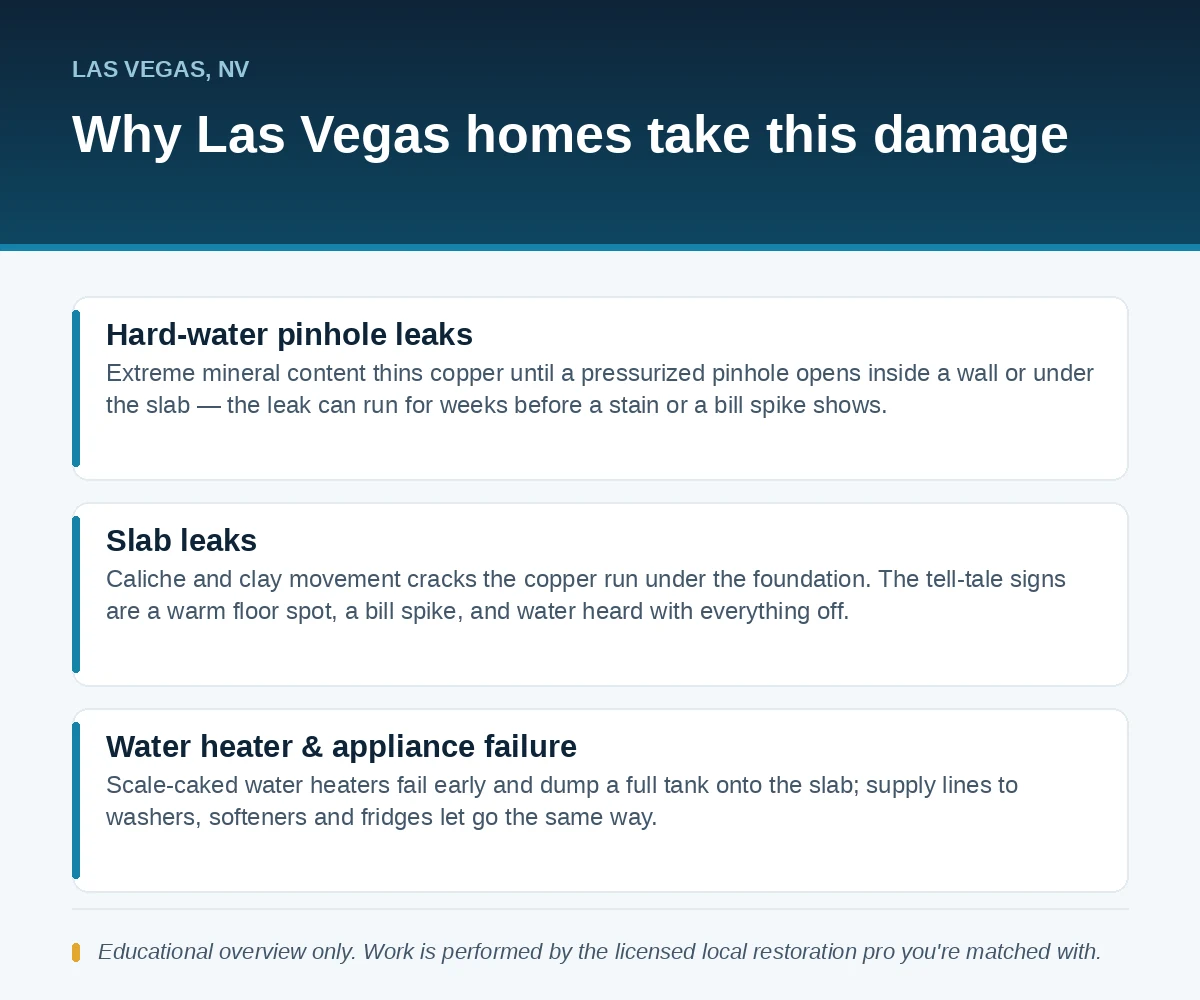
How much does water damage restoration cost in Vail, Tucson?
Professional water damage restoration in Vail, AZ typically costs between $1,400 and $3,800 for Category 1 clean pipe or supply leaks, while Category 2 appliance overflows and Category 3 monsoon flood or sewage cleanups range from $3,500 to $8,500+. Most sudden water losses are covered by Arizona homeowners insurance minus your policy deductible.
Does insurance cover swamp cooler leaks in Vail and Tucson?
Yes, standard Arizona HO-3 homeowners insurance policies generally cover sudden and accidental water damage from a ruptured rooftop swamp cooler supply line or float valve failure in Vail, AZ. Policies exclude gradual rust neglect, so documenting the sudden overflow with immediate thermal moisture logs and Xactimate photos within 24 hours protects your claim.
How fast does mold grow after a water leak in Vail, AZ?
Per U.S. EPA and IICRC S520 standards, mold spores begin colonizing damp drywall, baseboards, and insulation within 24 to 48 hours after a leak in Vail, AZ. Because warm desert temperatures accelerate microbial amplification inside closed wall cavities, starting commercial LGR dehumidification on day one prevents costly mold demolition.
Core Tucson Water & Mold Hubs Serving Vail
Every emergency dispatch in Vail is routed through our two primary Pima County hubs: water damage restoration in Tucson, AZ (for 24/7 truck-mounted extraction and structural drying) and mold remediation in Tucson, AZ (for negative-air HEPA containment and spore removal).
For cause-specific guidance in Vail, see our resources on swamp cooler leak Tucson ceiling recovery, polybutylene pipe leak water damage in Tucson, slab leak water damage in Tucson, and Tucson insurance carrier water damage claims, as well as neighboring crews for water damage restoration in Oro Valley and water damage restoration in Catalina Foothills.
Frequently Asked Questions: Sewage Backup Cleanup in Vail, AZ
Does homeowners insurance cover sewage backup cleanup from a swamp cooler or burst pipe in Vail, AZ?
Most Arizona homeowners insurance policies cover sudden and accidental water damage in Vail, AZ, including ruptured supply lines, water heater bursts, under-slab copper leaks, and sudden rooftop swamp cooler overflows. Gradual seepage or overland surface wash flooding typically requires separate flood coverage. Our technicians provide Xactimate estimates and infrared moisture photos directly to your adjuster.
What should I do in the first 30 minutes after discovering water damage in Vail, AZ?
First, shut off your main residential water valve at the street meter or exterior hose bib to stop active flooding. Second, turn off circuit breakers serving wet rooms and elevate wood furniture onto foil pads. Third, call our 24/7 dispatch line at (866) 695-5058 with your Vail, AZ address ready for immediate crew routing.
How fast can an emergency restoration crew arrive in Vail, AZ?
Our live operator routes the nearest available IICRC-certified extraction truck in Vail, AZ within minutes of your call. Typical on-site arrival near Pantano Wash and surrounding Pima County neighborhoods is 45 to 60 minutes, 24 hours a day, including weekends, holidays, and severe summer monsoon thunderstorm surges.
How much does professional sewage backup cleanup cost in Tucson, AZ?
In Tucson, standard Category 1 clean-water extraction and structural drying typically ranges between $1,400 and $3,800 depending on affected square footage. Category 2 greywater or Category 3 sewage and monsoon silt remediation ranges from $3,500 to $8,500+. When covered by homeowners insurance, you generally pay only your standard policy deductible.
Why is the 24 to 48 hour drying window critical for homes in Vail, AZ?
According to EPA and IICRC S500 guidelines, indoor mold spores begin colonizing damp drywall, baseboards, and adobe or wood framing within 24 to 48 hours. In Tucson's warm climate, hidden moisture trapped under tile or inside stucco walls rapidly triggers microbial growth and odors unless commercial LGR dehumidifiers extract it immediately.