The First 24 Hours After Water Damage in Tucson: A Step-by-Step Timeline
Whether it’s a monsoon flash flood, a swamp-cooler line that let go on the roof, or a burst supply pipe, the first 24 hours after water damage in a Tucson home largely decide the outcome. Act fast and methodically and you’re often looking at extraction and drying. Wait, and you’re looking at mold remediation and replaced materials. This is an hour-by-hour timeline of what to do — and what not to do — built around the mold clock that starts the moment water hits. Not sure yet how urgent your situation is? Our free Water Damage Emergency Triage tool gives an instant urgency read before you start the clock below.
Tucson Restoration Pros is a free dispatch and referral service. We connect homeowners with independent, licensed local restoration companies that carry their own insurance and do the actual work — we are not a contractor and don’t perform restoration ourselves. The steps below are general guidance to protect your home and your claim while a crew is on the way.
Why the clock matters
Per the U.S. EPA, wet materials should be dried within 24 to 48 hours to limit mold growth. In a Tucson home, drywall, baseboards, carpet pad, and cabinetry start wicking water immediately, and once mold establishes, the job changes from drying to removal. That’s the whole reason speed beats almost everything else in the first day.
The first hour: stop, stay safe, and call
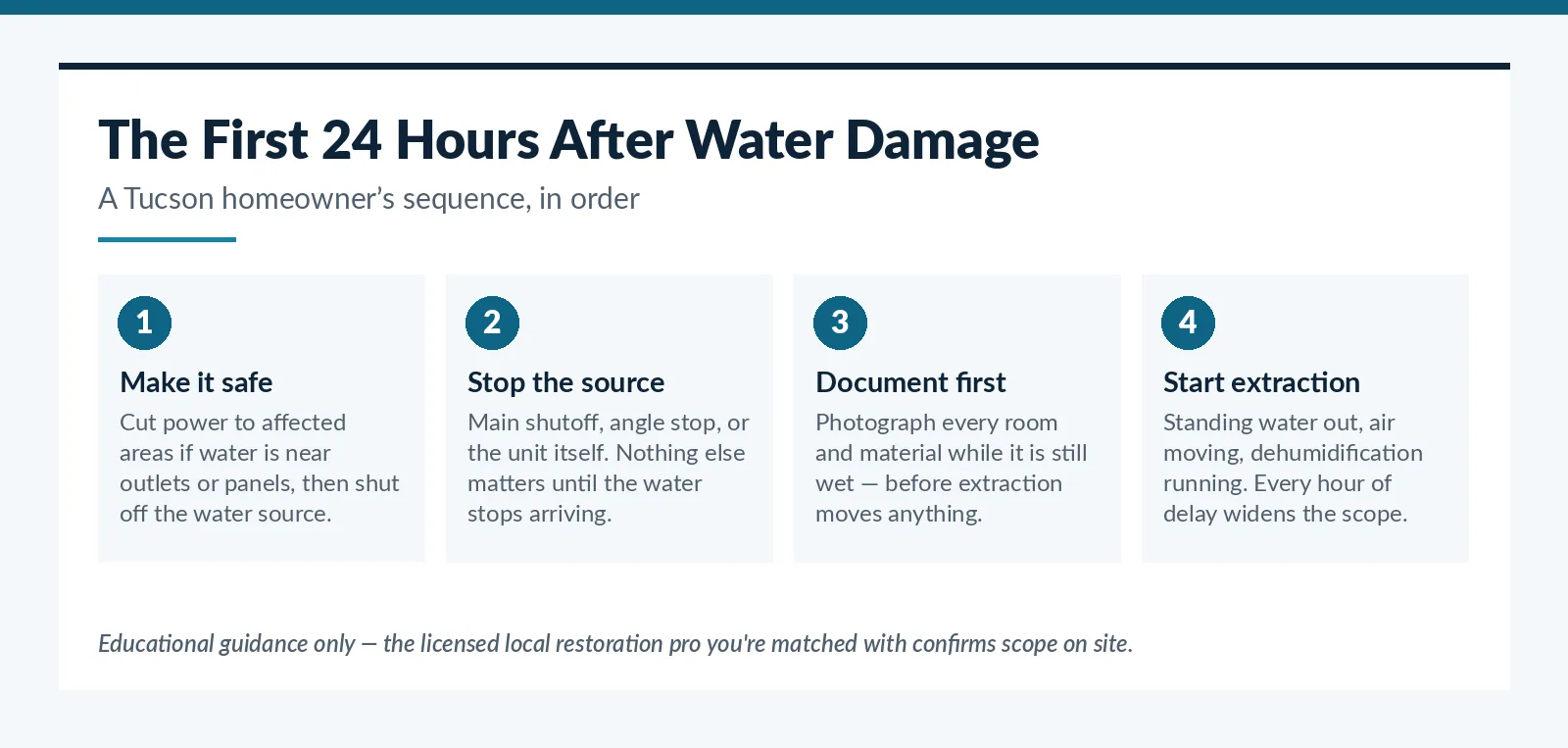
- Stop the water at the source. For a plumbing failure, shut off your main water valve — usually near the front hose bib or in a box by the street. For monsoon floodwater entering from outside, you can’t stop the source, so move to safety and documentation.
- Kill power to wet areas if you can do it safely. Don’t walk through standing water to reach the panel, and never touch electrical near water. If in doubt, leave it for a professional.
- Get people and pets out of contaminated water. Monsoon floodwater and any sewage backup are Category 3 “black water” — a biohazard. Don’t wade in it, and keep children and pets clear.
- Start the connection to a crew. The mold window is already counting. Call now and we’ll route you to a licensed local restoration company that runs 24/7 (dispatch availability varies by contractor and location) — see emergency water damage service.
Hours 1–3: document everything before you move anything
Before you start hauling things out, photograph and video the damage thoroughly — wide shots of each room and close-ups of soaked materials, the water source, and any damaged belongings. This is the backbone of your insurance claim. Note the date and time and what caused it. If it’s safe, locate any model or serial numbers on a failed appliance or water heater. Good documentation in the first few hours is what makes the difference when you file; our guide on whether insurance covers water damage in Tucson walks through what carriers typically look for.
Hours 1–6: limit the spread (safely)
Once it’s documented and the source is stopped, you can reduce damage while you wait for the crew:
- Move what you can. Lift furniture off wet carpet, get electronics and valuables to a dry area, and pull up small rugs.
- Blot and mop standing clean water if it’s Category 1 (a clean supply line) and safe to do so. Leave Category 2 and 3 water to the professionals.
- Get air moving with fans only if the water is clean and there’s no electrical risk. Do not run your HVAC if there’s any chance of contamination, and never use a household vacuum on water.
- Don’t lift soaked carpet yourself or tear into drywall — that’s extraction and demo a crew handles with the right gear and containment.
What not to do in the first 24 hours
A few well-meant moves make things worse. Don’t enter standing water near outlets or the panel. Don’t treat sewage or monsoon floodwater as ordinary water — it needs containment and disinfection, not a mop and bucket; see sewage backup cleanup. Don’t run the air handler if water may be contaminated, since it spreads moisture and spores through the house. And don’t wait to “see if it dries on its own” — in Tucson’s wall cavities and under cabinets, hidden moisture is exactly where mold takes hold.
Hours 6–24: professional extraction and drying begin
This is where a licensed crew earns its keep. They’ll measure moisture, classify the water category, extract standing water, and set commercial air movers and dehumidifiers to dry the structure to target — work performed to the IICRC S500 water-damage standard. They can also detect moisture hiding behind walls and under floors that a homeowner can’t see. The faster this water mitigation starts, the more of your home’s materials can be dried in place rather than removed. For monsoon-driven flooding specifically, see monsoon flood cleanup.
What it costs and how insurance fits
Restoration cost depends on how much water, how far it spread, the water category, and how quickly drying started — which is the strongest argument for acting in hour one. Smaller clean-water dry-outs sit at the low end; large or contaminated losses with material removal run substantially higher. Reaching out to us is free with no obligation; the restoration company you choose provides a written estimate after inspecting, and many bill your insurance directly. Sudden, accidental water damage is often covered, while gradual leaks and flood-from-outside may be treated differently — confirm specifics with your carrier and the company you hire.
Get connected to a vetted Tucson crew
The single most useful thing you can do right now is shorten the time between the water hitting and a professional starting extraction. Call now and we’ll connect you with a licensed, insured local restoration company that works to IICRC standards and runs 24/7 across our full Tucson & Southern Arizona service area (dispatch availability varies by contractor and location) — for the full service, see water damage restoration in Tucson.
→ Call now to connect with a local restoration crew
Frequently asked questions
How quickly do I need to act after water damage?
Fast. The EPA advises drying wet materials within 24 to 48 hours to limit mold. The sooner professional extraction and drying begin, the more of your home can be dried in place rather than removed.
What is the very first thing to do?
Stop the water at the source — shut off your main valve for a plumbing failure — then make sure it’s safe (no electrical hazard, no contaminated water) before doing anything else, and start the connection to a restoration crew.
Should I clean up the water myself?
You can blot or mop small amounts of clean (Category 1) water and move belongings to dry areas. Leave gray or black water, soaked carpet removal, and any drywall work to a licensed crew with proper equipment and containment.
Will my insurance cover it?
Sudden, accidental water damage is often covered, while gradual leaks and outside flooding may be handled differently. Document everything early and confirm coverage with your carrier and the restoration company you hire.
Is monsoon floodwater treated differently?
Yes. Monsoon floodwater is considered Category 3 “black water” — a biohazard that requires containment, removal, and disinfection rather than ordinary cleanup. Keep people and pets out of it and let professionals handle it.
Tucson Restoration Pros is a lead-generation and referral service. We are not a restoration contractor, are not affiliated with any government agency, and do not perform restoration, mitigation, or repair work. When you reach out, we connect you with one or more independent, licensed local restoration companies that handle the work, licensing, and insurance. Any costs mentioned are general ranges for planning only. In a life-threatening emergency, call 911; for active flooding, follow the National Weather Service “Turn Around, Don’t Drown” guidance.
Leave a Reply