Evaporative Cooler Maintenance in Tucson: A Leak-Prevention Checklist
Most swamp cooler water damage in Tucson isn’t bad luck. It’s a float valve that stuck, a pan that rusted through, a bleed-off line that clogged or a cooler that was never shut down properly in the fall. Those are all maintenance problems, and they’re cheap to catch compared with a soaked ceiling, wet insulation and a mold job. This guide walks through evaporative cooler maintenance through the Tucson year, with a focus on the parts that cause leaks, and what to do if you find water where it shouldn’t be.
Why coolers leak in Tucson
A rooftop evaporative cooler is basically a metal box full of water sitting on top of your house. Tucson’s water carries a lot of dissolved minerals, and as water evaporates off the pads, those minerals stay behind as scale. Add months of 100-degree sun, monsoon wind and dust, and the parts that hold the water in, including the pan, float valve, overflow and supply line, wear out on a predictable schedule. Most cooler leaks come from one of these:
- Stuck or scaled float valve that won’t shut off, overfilling the pan.
- Clogged bleed-off or overflow line that can’t carry excess water to the roof drain.
- Rusted or cracked pan, especially on older metal units.
- Failed supply line or fitting, often a brittle plastic line baked by the sun.
- Worn roof curb or flashing where the cooler duct passes through the roof.
- Condensation and runoff in the duct during humid monsoon weeks.
Spring start-up (March to April)
Have the cooler serviced before you need it. A good start-up includes:
- Cleaning or replacing the pan liner and scrubbing out scale and sediment.
- Replacing pads. Aspen pads usually need replacing every season in Tucson; rigid media pads last longer but still need cleaning.
- Checking the float valve and setting the water level so it stays well below the overflow.
- Testing the pump, cleaning the distribution lines and making sure water spreads evenly over the pads.
- Inspecting the belt and motor, and oiling bearings if the unit calls for it.
- Confirming the bleed-off line is open and draining where it should.
- Reconnecting the water supply and checking every fitting for drips with the unit running.
- Looking at the roof curb, duct and the ceiling around the register inside the house.
Mid-season checks (June to September)
Once a month during the hot season, or after a big monsoon storm, it’s worth a quick look:
- Look at the ceiling around the cooler register for new stains, bubbling paint or sagging drywall.
- Listen for the cooler running water constantly when the fan is off, a sign the float valve is stuck.
- Check the roof around the unit for standing water or a wet patch that doesn’t dry by afternoon.
- Note any new musty smell when the cooler runs. That can point to moisture in the duct.
During humid monsoon weeks, coolers work harder and humidity indoors climbs. Water in the duct or around the register is more likely then, and so is mold if it sits.
Cooler already leaked into the ceiling? Talk to a real Tucson water damage pro about drying and mold checks.
Tap to call (866) 695-5058Tap to reach the 24/7 dispatch line. The call costs nothing and there is no obligation to book.
Fall shutdown (October to early November)
This is the step people skip, and it’s the reason so many cooler leaks get found in late fall. Once nighttime lows settle and you’ve switched to heat or a heat pump, shut the cooler down properly:
- Turn off the water supply to the cooler and disconnect or drain the line so it can’t freeze and split on a cold winter night.
- Drain the pan completely and clean out scale and sediment.
- Unplug or switch off the pump and fan.
- Close the damper or install a duct cover inside so warm air and moisture don’t move up into the cold cooler all winter.
- Cover the cooler outside with a fitted cover if it’s a type that allows one.
- Take one more look at the ceiling around the register for any staining that showed up during the season.
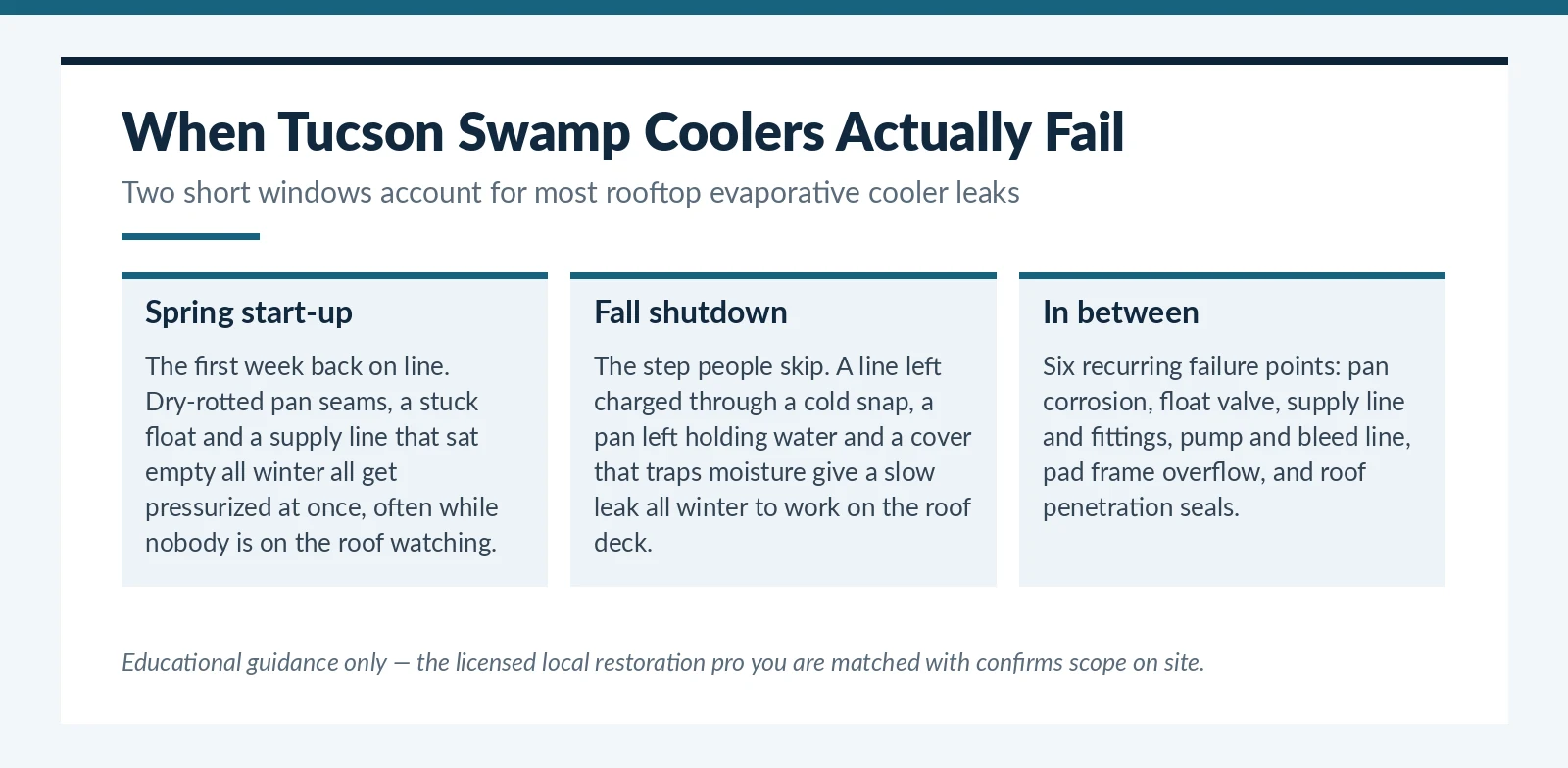
Hard freezes aren’t common in Tucson, but they do happen, and a supply line left full on the roof is a classic way to start the spring with a leak. The guide to when Tucson swamp coolers actually fail covers both risk windows in more detail.
Who should do the work
Changing pads and checking the float valve is doable for a comfortable, careful homeowner, but rooftop work is a real fall risk, especially on tile or steep pitched roofs. Many Tucson homeowners have an HVAC or cooler service company handle start-up and shutdown each year. For work beyond small repairs, Arizona requires an ROC-licensed contractor, so ask for the license number and check it on the Arizona Registrar of Contractors website.
If the cooler has already leaked
- Shut off the cooler and its water supply right away.
- Put a bucket under any active drip and move furniture and electronics out of the way.
- Take photos of the ceiling, the register and the unit before anything is removed.
- Don’t poke holes in a sagging ceiling yourself unless water is pooling and you can do it safely.
- Have a restoration pro check moisture in the ceiling and insulation. Tucson’s dry air makes the surface look fine fast while the material above stays wet.
The swamp cooler leaking through the ceiling guide walks through the first hour step by step. Coverage depends on whether the leak was sudden or the result of wear and maintenance issues, which is covered in does insurance cover a swamp cooler leak.
Frequently asked questions
How often should a swamp cooler be serviced in Tucson?
At least twice a year: a spring start-up before the hot season and a fall shutdown once you switch to heat. A quick monthly check of the ceiling, roof and float valve during summer helps catch leaks early.
When should I shut down my evaporative cooler in Tucson?
Usually in October or early November, once nighttime lows settle and you no longer need cooling. Drain the pan, disconnect or drain the water line, and close the damper or cover the duct.
Why is my swamp cooler leaking water?
Common causes are a stuck or scaled float valve, a clogged bleed-off or overflow line, a rusted pan, a failed supply line, or worn roof flashing around the duct.
How often should cooler pads be replaced?
Aspen pads usually need replacing every season in Tucson because of mineral scale and dust. Rigid media pads last longer but still need cleaning.
What should I do if my cooler leaked into the ceiling?
Shut off the cooler and its water supply, catch the drip, photograph the damage and have the ceiling and insulation checked for moisture. Tucson’s dry air can make the surface look dry while materials above stay wet.
Stain around the cooler register? Get connected with a licensed local water damage pro serving Tucson, Oro Valley, Marana, Vail, Sahuarita and Green Valley.
Tap to call (866) 695-5058Call to get connected with a licensed local restoration pro. Your quote is between you and the pro.
Tucson Restoration Pros is a dispatch and referral service connecting homeowners with independent, licensed local water and mold restoration companies across Tucson & Southern Arizona. We are not a licensed restoration contractor and do not perform restoration work ourselves. Insurance information here is general; your policy and adjuster decide coverage.
Leave a Reply